

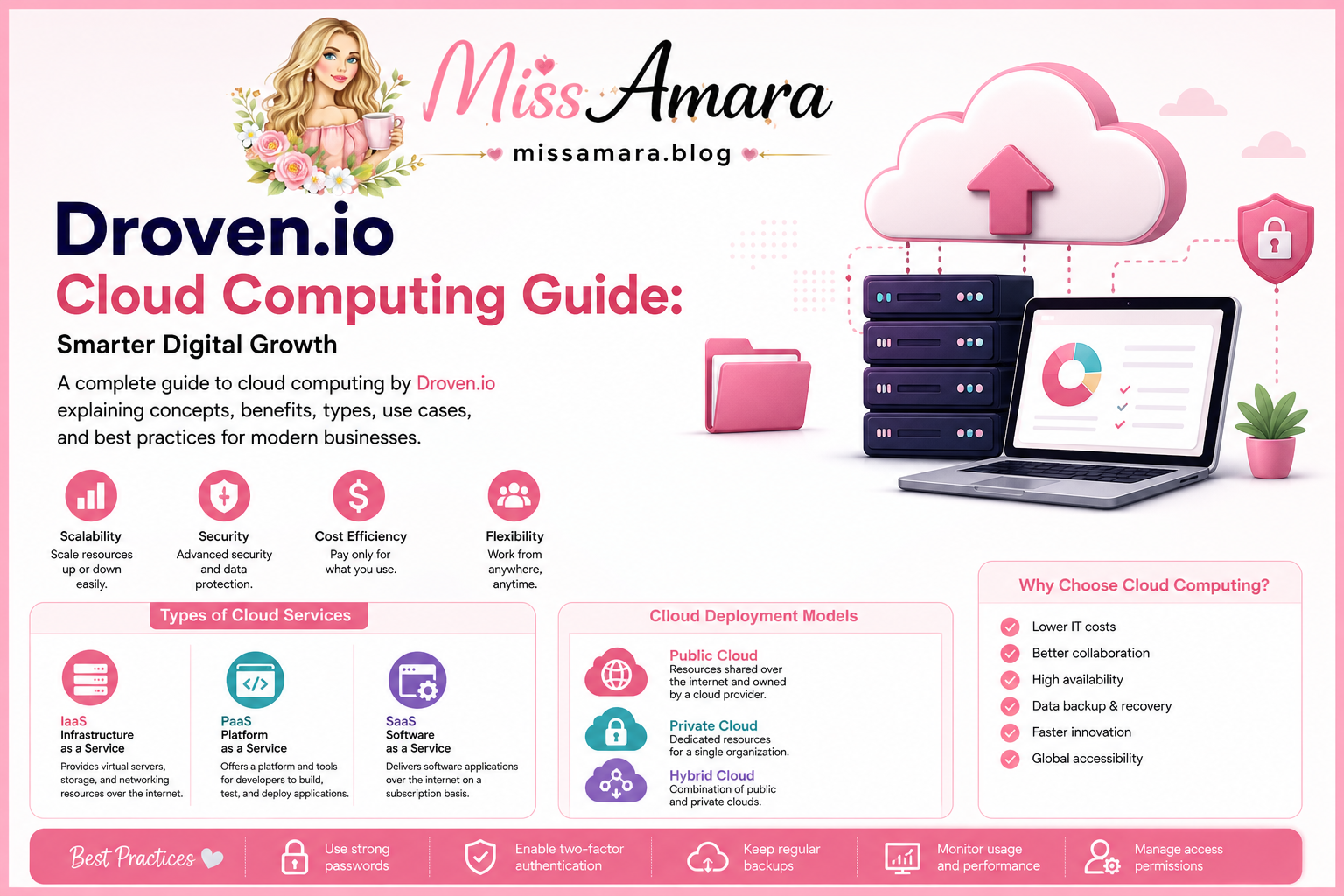
Cloud technology is no longer just for giant tech companies. Today, even small businesses, bloggers, startups, and freelancers depend on cloud systems to store files, run applications, improve security, and scale faster.
That is where the Droven.io cloud computing guide becomes useful. Instead of confusing technical explanations, it helps users understand how cloud infrastructure actually works in the real world and how businesses can use it without wasting money or time.
Whether you are launching a website, managing remote teams, or building online tools, understanding cloud computing can completely change how efficiently you work.
Why Cloud Computing Matters More Than Ever
A few years ago, companies needed expensive servers, dedicated office systems, and IT teams just to manage data. Now, cloud platforms allow businesses to access computing power online from anywhere.
The shift happened because cloud computing offers:
- Faster deployment
- Lower operational costs
- Better flexibility
- Improved collaboration
- Stronger security systems
- Easy scalability
The Droven.io cloud computing guide explains these benefits in a practical way rather than using complicated industry jargon.
For modern businesses, cloud technology is becoming as important as electricity or internet access.
Understanding Cloud Computing in Simple Words
Cloud computing means using online servers instead of relying only on local computers or physical hardware.
Instead of storing everything on your personal device, cloud systems let you:
- Store files online
- Run applications remotely
- Access services through the internet
- Scale resources instantly
For example:
When you upload photos to Google Drive or stream movies on Netflix, cloud computing is working in the background.
The same principle powers:
- Online businesses
- Mobile apps
- E-commerce platforms
- AI tools
- Banking systems
- Remote work software
The Droven.io cloud computing guide breaks down these concepts for beginners while still offering valuable insights for experienced users.
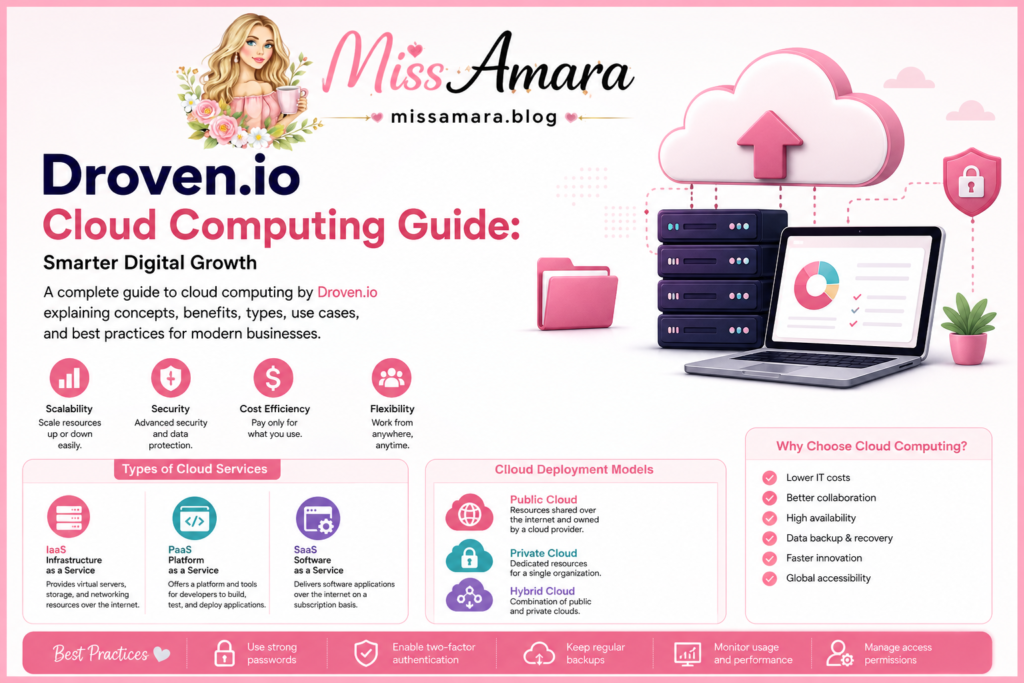
Different Types of Cloud Services Explained
One reason many people get confused about cloud computing is because there are different service models.
Here are the main ones explained simply.
Infrastructure as a Service (IaaS)
IaaS gives businesses virtual servers and networking resources online.
Instead of buying physical hardware, companies rent cloud infrastructure.
Popular examples include:
- Amazon Web Services (AWS)
- Microsoft Azure
- Google Cloud Platform
This model works best for:
- Growing startups
- Developers
- Large-scale websites
- Businesses needing flexibility
Real-Life Example
A gaming startup launches a new multiplayer game. Suddenly, thousands of users join overnight.
Instead of buying expensive servers, the company scales its cloud infrastructure instantly using IaaS.
That flexibility prevents crashes and improves user experience.
Platform as a Service (PaaS)
PaaS provides development tools and environments so developers can build applications faster.
Users focus on coding while the provider handles:
- Servers
- Updates
- Security patches
- Infrastructure management
This saves huge amounts of time for software teams.
Real-Life Example
A mobile app company uses cloud-based development tools to launch updates weekly instead of monthly because server management is automated.
Software as a Service (SaaS)
SaaS is the most common cloud model people use daily.
Applications run online through browsers or apps.
Examples:
- Gmail
- Dropbox
- Zoom
- Canva
Businesses love SaaS because:
- No installation is required
- Updates happen automatically
- Teams can collaborate remotely
The Droven.io cloud computing guide highlights SaaS as one of the easiest entry points for businesses moving toward digital transformation.
Key Advantages Businesses Get From Cloud Systems
Cloud computing is not just about storage anymore. It impacts almost every part of business operations.
Lower Technology Costs
Traditional IT systems require:
- Physical hardware
- Maintenance
- Cooling systems
- Upgrades
- Dedicated staff
Cloud services reduce these expenses significantly.
Businesses only pay for what they actually use.
For startups with limited budgets, this is a major advantage.
Remote Work Becomes Easier
Teams can work from anywhere using cloud-based tools.
Employees access:
- Files
- Dashboards
- Communication systems
- Project software
This became extremely important during the rise of remote and hybrid work environments.
Real-Life Example
A digital marketing agency with employees in Pakistan, the UK, and Canada uses cloud collaboration tools to manage campaigns together in real time.
Without cloud systems, coordination would be far more difficult.
Better Data Security
Many people assume cloud systems are unsafe, but large providers invest billions into cybersecurity.
Advanced cloud platforms often include:
- Encryption
- Backup systems
- Multi-factor authentication
- Threat monitoring
- Disaster recovery solutions
The Droven.io cloud computing guide emphasizes that security depends heavily on proper setup and smart management practices.
Faster Business Growth
Cloud platforms make scaling easier.
If traffic increases suddenly, businesses can add more resources instantly without replacing hardware.
This helps:
- E-commerce stores during sales
- Streaming platforms
- News websites
- Gaming companies
- SaaS startups
Traditional systems struggle with sudden traffic spikes.
Cloud infrastructure adapts much faster.
Common Cloud Deployment Models
Businesses choose different cloud environments depending on their needs.
Public Cloud
Resources are shared through large providers like AWS or Azure.
Advantages:
- Affordable
- Flexible
- Easy to launch
Best for:
- Small businesses
- Blogs
- Startups
- General applications
Private Cloud
Infrastructure is dedicated to one organization only.
Advantages:
- More control
- Stronger compliance
- Better customization
Best for:
- Banks
- Healthcare companies
- Government organizations
Hybrid Cloud
Hybrid cloud combines public and private systems together.
This allows businesses to:
- Keep sensitive data private
- Use public cloud for scalability
Many enterprises now prefer hybrid solutions.
The Droven.io cloud computing guide often highlights hybrid strategies because they balance flexibility with security.
Important Challenges You Should Know
Cloud computing has major advantages, but there are still challenges users should understand.
Internet Dependency
Without stable internet access, cloud systems become difficult to use.
For businesses operating in regions with weak connectivity, this can create problems.
Vendor Lock-In
Some companies become too dependent on one cloud provider.
Migrating later can become expensive and complicated.
Smart businesses prepare backup migration plans early.
Cost Mismanagement
Cloud systems can become expensive if resources are not monitored carefully.
Unused storage, unnecessary servers, and poor optimization increase monthly costs.
Practical Tip
Businesses should regularly audit:
- Storage usage
- Server activity
- Bandwidth consumption
- Subscription tools
This simple habit can save thousands annually.
How Beginners Can Start Using Cloud Computing
Many people think cloud computing is only for developers or IT professionals.
That is not true.
Here is a beginner-friendly path recommended in the Droven.io cloud computing guide.
Step 1: Identify Your Needs
Ask simple questions:
- Do you need storage?
- Website hosting?
- Team collaboration?
- App development?
- Backup systems?
Your goals determine the best cloud solution.
Step 2: Start Small
Do not invest heavily immediately.
Test:
- Free plans
- Trial services
- Basic storage tools
- Lightweight cloud apps
This reduces risk while helping you learn.
Step 3: Learn Basic Security Practices
Always:
- Use strong passwords
- Enable two-factor authentication
- Limit user access
- Keep backups
Security mistakes cause many avoidable problems.
Step 4: Monitor Performance
Track:
- Loading speed
- Downtime
- User activity
- Cost reports
Good monitoring prevents technical surprises later.
Industries Benefiting Most From Cloud Technology
Cloud computing now powers almost every major industry.
Healthcare
Hospitals use cloud systems for:
- Patient records
- Telemedicine
- Medical imaging
- Data sharing
Cloud platforms improve efficiency and accessibility.
Education
Schools and universities rely on cloud tools for:
- Online classes
- Digital assignments
- Collaboration
- Learning management systems
Students can learn from anywhere.
E-Commerce
Online stores depend heavily on cloud systems for:
- Product databases
- Payment systems
- Traffic scaling
- Customer analytics
Without scalable infrastructure, large online stores would crash during peak demand.
Media and Entertainment
Streaming services use cloud infrastructure to deliver:
- Videos
- Music
- Live events
- Gaming content
Cloud networks reduce buffering and improve speed globally.
Future Trends in Cloud Computing
Cloud technology continues evolving rapidly.
Some major trends include:
AI-Powered Cloud Systems
Artificial intelligence is helping automate cloud management and improve efficiency.
Edge Computing
Data processing happens closer to users for faster performance.
Multi-Cloud Strategies
Businesses now use multiple providers instead of relying on one.
Green Cloud Computing
Companies are focusing on energy-efficient data centers and sustainability.
The Droven.io cloud computing guide positions these trends as critical areas businesses should monitor over the next few years.
People Also Ask
Is cloud computing good for small businesses?
Yes. Cloud computing helps small businesses reduce upfront costs, improve flexibility, and access advanced tools without buying expensive infrastructure.
What is the biggest benefit of cloud computing?
Scalability is one of the biggest benefits. Businesses can increase or reduce resources instantly depending on demand.
Is cloud computing secure?
Modern cloud platforms offer strong security systems, but users must also follow safe practices like strong passwords and proper access controls.
Can beginners learn cloud computing easily?
Absolutely. Many cloud tools are designed for non-technical users. Starting with simple storage or collaboration tools is a great first step.
How does cloud computing save money?
Businesses avoid purchasing costly hardware and only pay for the resources they actually use.
Smart Tips Before Choosing a Cloud Platform
Before selecting any provider, remember these tips:
- Compare pricing carefully
- Read uptime guarantees
- Check customer support quality
- Understand backup policies
- Look for scalability options
- Avoid unnecessary long-term contracts
You should also study competitor platforms and industry case studies.
For deeper website optimization strategies, adding an internal guide like hosting can improve user navigation and SEO structure.
Final Thoughts
Cloud computing is no longer optional for businesses trying to stay competitive. From startups to multinational companies, organizations are using cloud platforms to reduce costs, improve speed, and create better digital experiences.
The biggest advantage of the Droven.io cloud computing guide is that it simplifies a complex topic into practical knowledge people can actually use.
Instead of focusing only on technical theory, it helps readers understand how cloud systems affect real business growth, remote work, scalability, and long-term digital success.
As technology continues evolving, businesses that understand cloud infrastructure early will have a major advantage in efficiency, adaptability, and innovation.
