




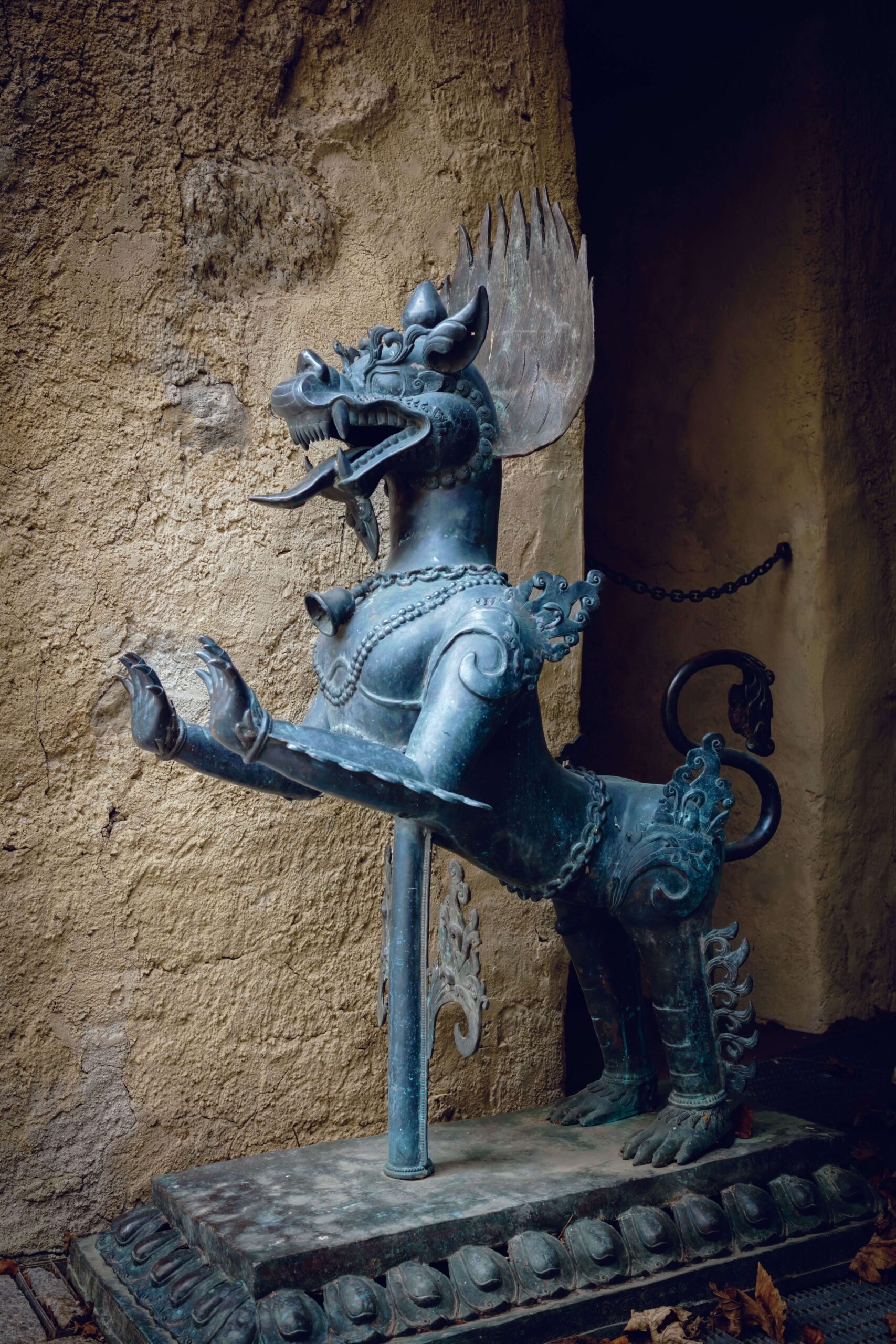
Kirin mythology traces back to the Chinese qilin (麒麟), a composite creature that appeared in Chinese folklore centuries before Japan adopted and renamed it “kirin.” The confusion between kirin and qilin isn’t a modern translation error. It’s the result of the same mythological creature traveling between two cultures and picking up different visual traits along the way.
Where the Qilin Actually Comes From
The qilin appears in Chinese texts dating back to the Zhou dynasty. Ancient writers described it as a gentle, benevolent creature that punishes the wicked and rewards the virtuous. Descriptions combine features from several animals: a dragon’s head, deer-like body, ox’s tail, and sometimes scales covering the body like a fish or reptile. This isn’t a single fixed image. Descriptions varied across dynasties and regions, and that’s why modern depictions of the qilin look inconsistent even within Chinese art itself.
The creature carries strong symbolic weight tied to good governance. Chinese folklore links the qilin’s appearance to the birth or death of a great sage, or to the reign of a wise ruler — most famously tied to legends surrounding Confucius. Traditionally, people read a qilin sighting as a sign that Heaven approved of the current ruler. That made the creature politically significant, not just decorative.
How Japan’s Kirin Diverged From the Chinese Original
Japan imported the qilin concept through cultural exchange and rendered it as “kirin,” using the same kanji characters but developing its own visual tradition over time. Japanese kirin art historically kept closer to the dragon-deer-ox hybrid form than some later Chinese depictions did.
Modern commercial imagery causes most of the confusion Western audiences run into today. The Kirin Brewery Company’s logo shows a creature that looks closer to a dragon-maned horse than the composite creature described in classical texts. That logo has shaped global perception of “kirin” far more than any mythological text has. This is part of why so many people picture something horse-like when they hear the word.
What Is the Difference Between a Qilin and a Kirin?
The short answer: they share the same mythological origin, but the terms now function differently depending on cultural and modern context.
“Qilin” refers to the original Chinese creature and its associated folklore, symbolism, and classical Chinese art style. “Kirin” is the Japanese reading of the same characters. It now carries additional connotations from Japanese art, pop culture, and commercial branding that the Chinese qilin never developed. In casual English usage, people often use “kirin” specifically for Japanese media, games, or the beer brand. “Qilin” gets used more in academic or China-focused contexts.
Neither term is more “correct” than the other. They’re regional variants of the same mythological figure — similar to how “dragon” describes different creatures depending on whether you’re talking about European or East Asian traditions.
Why People Keep Calling It a Unicorn
Western sources frequently translate qilin or kirin as “Chinese unicorn” or “Japanese unicorn.” That label sticks even though it’s a loose approximation at best.
The comparison exists mainly because both creatures function as symbols of purity, rarity, and moral virtue in their respective traditions, not because they share a physical description. A European unicorn is a single-horned horse. A qilin is a scaled, multi-animal hybrid that sometimes has a single horn, or none depending on the depiction, but otherwise looks nothing like a horse.
This mistranslation persists partly because early Western translators needed a familiar reference point for readers unfamiliar with East Asian mythology. “Unicorn” was the closest available shorthand for “mythical, virtuous, rare creature.” The label stuck even as it created lasting confusion about what the creature actually looks like.
Common Misconceptions About Kirin Mythology
Assuming kirin and qilin have always looked the same. Classical Chinese depictions vary significantly by dynasty and region. Some show a more deer-like body, others emphasize dragon scales more heavily. There’s no single “correct” historical image to point to.
Treating the Kirin Brewery logo as mythologically accurate. The commercial mascot draws loosely on the folklore name, but designers built it for branding, not historical accuracy. Many people’s mental image of a “kirin” actually comes from this logo rather than any classical source.
Assuming the creature is always benevolent in every story. The qilin/kirin is generally associated with virtue and good omens, but some folklore traditions describe it delivering punishment to the corrupt or unjust. That complicates the “purely gentle creature” framing that modern retellings sometimes flatten it into.
Kirin/Qilin Across Cultures
| Tradition | Common Name | Key Physical Traits | Primary Symbolism |
|---|---|---|---|
| Chinese | Qilin | Dragon head, deer body, ox tail, sometimes scaled | Virtue, wise rulership, moral judgment |
| Japanese | Kirin | Similar hybrid form, dragon-deer-ox influence | Good fortune, protection, purity |
| Western pop-culture | “Chinese/Japanese unicorn” | Often simplified to horse-like or single-horned imagery | Rarity and mythical purity (loosely borrowed comparison) |
FAQs
Is a kirin the same as a qilin?
They share the same mythological origin. The kirin is the Japanese adaptation of the Chinese qilin. The terms diverged over time as each culture developed its own artistic and symbolic traditions around the creature.
Why does the Kirin beer logo look like a horse-dragon instead of the traditional creature?
Designers built the logo for branding purposes and took creative liberties rather than strictly following classical folklore descriptions. It has become many people’s primary reference point for “kirin,” even though it diverges from traditional depictions.
Is the qilin considered a dragon in Chinese mythology?
No, though it shares some dragon-like features such as scales or a dragon’s head in many depictions. Chinese mythology generally classifies the qilin as its own distinct creature, separate from the Chinese dragon (long), which has its own separate folklore and symbolism.
Does kirin mythology appear in modern media?
Yes, kirin-inspired creatures appear frequently in anime, video games, and fantasy media, often stylized well beyond traditional depictions. These modern versions usually borrow the name and general “noble hybrid creature” concept rather than replicating classical folklore accurately.
