

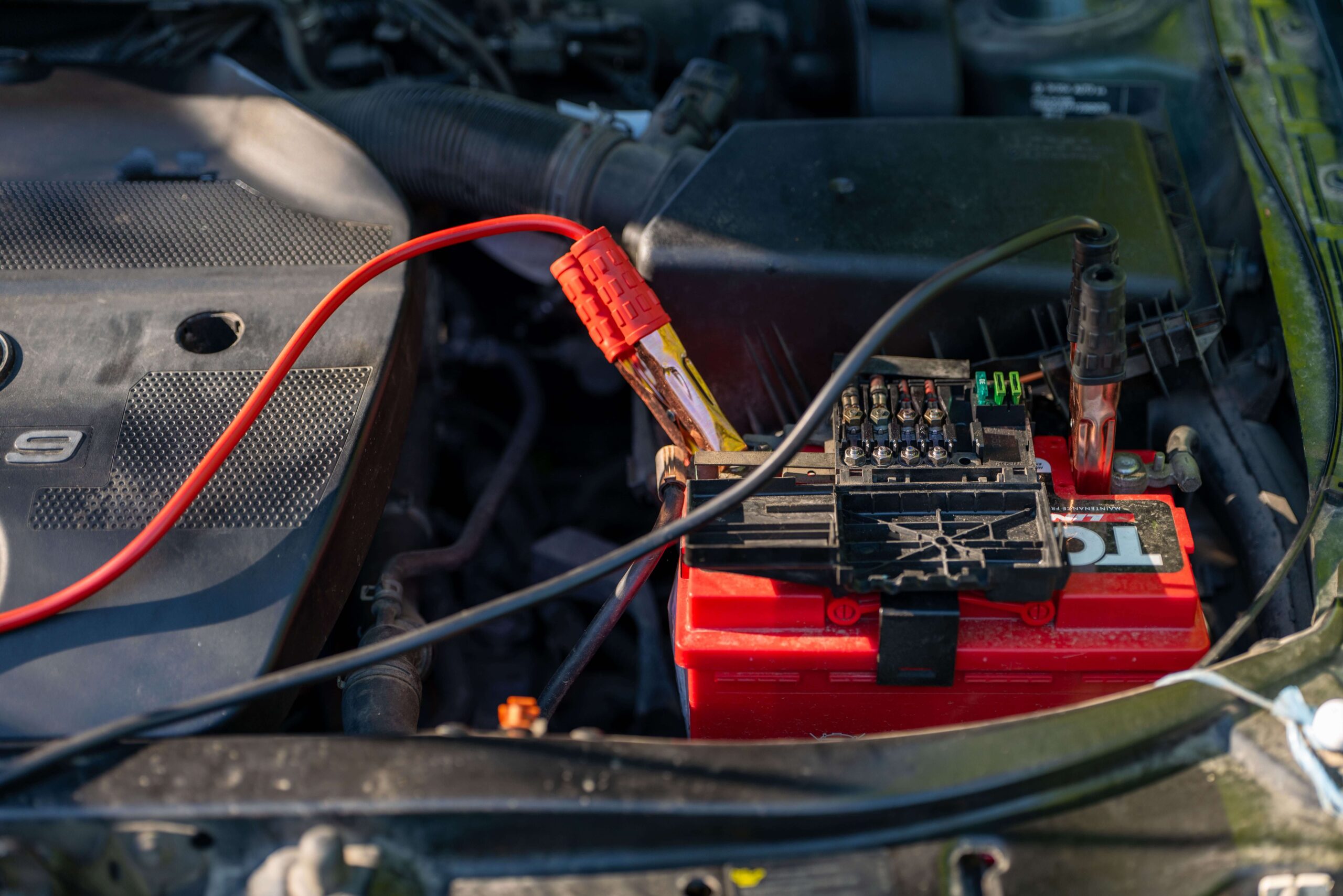
Swapping a car battery is mechanically simple — two bolts, two cables, in and out in fifteen minutes. The part that actually trips people up isn’t the battery itself. It’s what happens to the car’s electronics when you disconnect power, and the fact that “just like the old one” isn’t always true anymore.
Before You Touch Anything
Check three things first: the group size number stamped on your old battery’s label (something like “35” or “H6”), the terminal layout (top-post or side-post — they’re not interchangeable), and whether your car has a battery monitoring sensor clipped to the negative terminal. That last one matters more than people expect on newer German and some Japanese vehicles — more on that below.
Put on gloves and eye protection. A car battery holds enough charge to weld a dropped wrench to the frame if it bridges the wrong two points, and the electrolyte inside is dilute sulfuric acid. If the old battery is bulging, cracked, or smells like rotten eggs, don’t try to remove it yourself — it may be venting hydrogen gas or leaking, and that’s a job for someone with the right handling equipment.
One decision to make before you start: does your car need a memory saver? If you want to keep your radio presets, clock, seat memory, and any stored fault-code history, plug a 9V-battery memory saver into the cigarette lighter or OBD port before disconnecting anything. Without it, some cars will simply forget the radio station presets — mildly annoying. Others, particularly older Fords and some European models, will lock the radio and ask for a security code you may not have.
The Actual Swap
Disconnect the negative cable first. This is the one rule that actually matters for safety. The negative terminal connects to the car’s chassis, which is grounded everywhere. If you disconnect positive first and your wrench brushes any grounded metal while it’s still touching the positive terminal, you complete a circuit — that’s the spark, the arc, and occasionally a fused wrench. Loosen the negative terminal nut, twist the clamp until it lifts free, and tuck the cable out of the way so it can’t swing back and touch the post.
Then disconnect positive the same way. If the terminal is corroded and won’t budge, don’t force it sideways — a terminal puller (a small, inexpensive tool) spreads the clamp evenly instead of cracking the battery post, which is a real risk with old, brittle posts.
Remove the battery hold-down clamp or bracket — almost every battery has one, usually a single bolt at the base or a bar across the top. Skipping this and just lifting the battery out isn’t just sloppy; an unsecured battery bounces around on rough roads and can short against the chassis.
Lift the battery straight out. They’re heavier than they look — a typical automotive battery runs 30 to 50 pounds — so lift with your legs, and use both hands under the base rather than the built-in strap alone if the battery feels old and the strap looks worn.
Install the new battery, secure the hold-down clamp, and reconnect — positive first, negative last, the exact reverse of removal, for the same short-circuit reason. Tighten the terminal nuts until they’re snug and the clamp doesn’t twist by hand. Don’t crank them down hard with a long wrench — overtightening is one of the more common ways people crack a brand-new battery’s post, and a cracked post can leak or fail within days.
Where People Actually Go Wrong
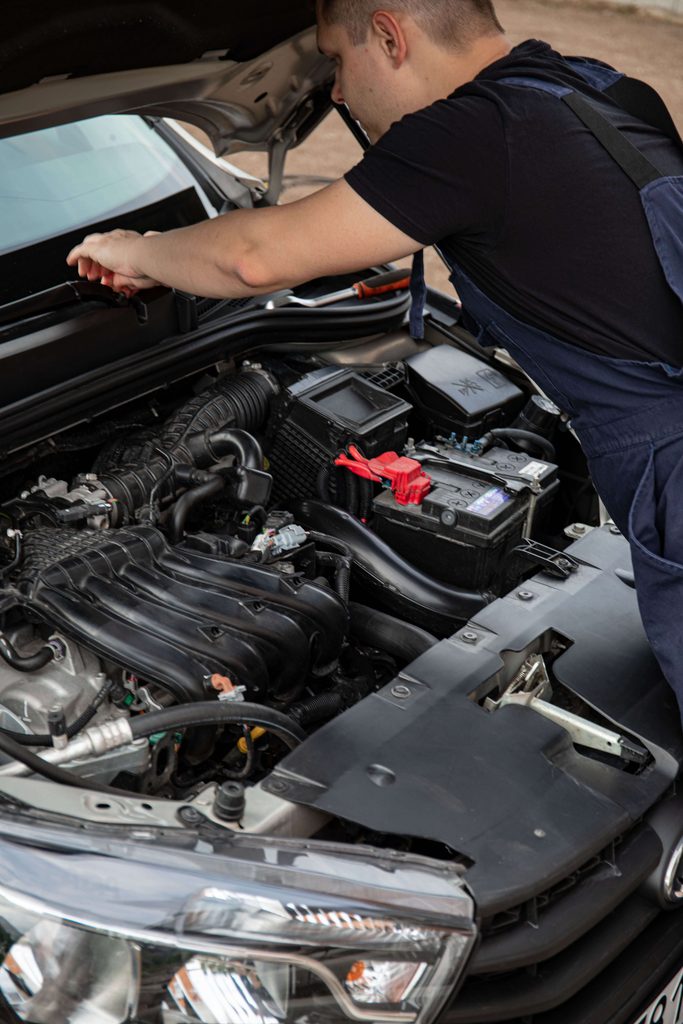
Reversing the disconnect order. It’s not just a “best practice” — doing positive-first on removal is the single most common way people cause a spark or short while working alone.
Buying by price instead of group size and CCA. A battery that physically fits but has a lower cold cranking amp (CCA) rating than your car’s original spec can leave you underpowered in cold weather, even though it “worked” when you tested it in a warm parts-store parking lot.
Ignoring the battery monitoring sensor. If your car has one — a small black clip with a wire integrated into the negative terminal clamp — it’s not just a connector. It measures charge rate and feeds that data to the car’s charging system. Disconnect and reconnect it carelessly, or install a battery without registering it, and some vehicles will undercharge the new battery for weeks, shortening its life before you ever notice a problem.
Assuming any battery works in a hybrid. In hybrid and electric vehicles, the 12V battery you’re changing is separate from the large traction battery pack. It still starts the car’s low-voltage systems, but touching the high-voltage system is a different job entirely — leave that to a qualified technician.
Not neutralizing corrosion before reinstalling. White or bluish crust on the old terminals is acid corrosion. A paste of baking soda and water neutralizes it; wire-brushing it off dry just spreads conductive dust around the engine bay.
When the Normal Advice Doesn’t Apply
Some vehicles — many BMWs, several recent Mercedes-Benz and Volkswagen models — require the new battery to be “registered” with a diagnostic tool after installation. The car’s charging system tracks battery age and health, and without registration it may keep charging as if the old, degraded battery is still installed, which shortens the new one’s lifespan. If your manual mentions “battery registration” or “IBS” (intelligent battery sensor), a DIY swap without that step is only half the job.
A handful of cars — some minivans and certain European sedans — mount the battery in the trunk, under a rear seat, or behind a wheel well liner instead of under the hood. The disconnect-reconnect order is identical, but budget extra time for trim removal, and check that the compartment has a vent tube if the original did — batteries in enclosed spaces sometimes need to vent hydrogen gas outside the cabin.
If your car won’t start even with a known-good battery installed, the battery was likely never the actual problem — a failing alternator, a parasitic draw from something staying powered overnight, or a bad ground connection can all mimic a dead battery. Swapping the battery doesn’t diagnose those.
| Battery Type | Best For | Main Advantage | Main Limitation |
|---|---|---|---|
| Flooded lead-acid | Standard daily drivers, older cars | Lowest cost | Shorter lifespan, less vibration-resistant |
| AGM (absorbed glass mat) | Cars with stop-start systems, higher electrical load | Handles frequent cycling, vibration-resistant | Costs more, requires an AGM-compatible charger |
| EFB (enhanced flooded battery) | Entry-level stop-start vehicles | Cheaper than AGM, better cycling than standard flooded | Less durable than AGM under heavy stop-start use |
Check your owner’s manual before downgrading from AGM to standard flooded to save money — cars with stop-start systems are often designed around AGM’s ability to handle the constant on-off cycling, and a standard battery may fail within months under that load even though it physically fits.
How to Change Car Battery: FAQs
Do I really need a memory saver?
Not for safety — it only preserves settings like radio presets, clock, and sometimes stored diagnostic data. Skip it and worst case you re-enter a few settings. The exception is any car with a radio security code you don’t have on hand; check that before disconnecting.
Can I just disconnect the battery to reset my car’s computer?
You can, and it does clear some short-term adaptive values, but it’s not a clean “reset” the way people sometimes assume. It can also trigger relearn procedures — idle relearn, window auto-up/down calibration — that some cars complete automatically and others need a specific procedure for. Check your manual if things feel slightly off afterward.
How long does a car battery actually last?
Typically three to five years, but that range depends heavily on climate, how many short trips you take versus long drives, and whether the charging system is working correctly. Frequent short trips undercharge the battery over time, shortening its life regardless of the battery’s rated quality.
What do I do with the old battery?
Take it to an auto parts store — most accept old batteries for recycling, and many charge a “core fee” on the new battery that gets refunded when you bring the old one in. Car batteries are classified as hazardous waste and shouldn’t go in regular trash.
Why does my new battery seem weak already?
If it’s genuinely new and already struggling, check the alternator’s charging output and look for a parasitic draw — something drawing power while the car is off, like a trunk light that doesn’t shut off or an aftermarket accessory wired incorrectly. On vehicles with a battery monitoring sensor, an unregistered sensor can also cause chronic undercharging that looks like a bad battery.

1 Comment
Pingback: How to Align Car Tires: Easy Wheel Alignment Guide