


Floating shelves are wall-mounted shelves with hidden brackets, so no supports show below them. They add storage and display space without taking up floor space, which makes them a smart pick for small rooms. This guide covers the main styles, the best spots in each room, weight limits, spacing rules, and install steps. You will also learn the mistakes that make shelves sag or fall.
What Are Floating Shelves?
A floating shelf is a board fixed to the wall with a bracket hidden inside the shelf or behind it. From the front, you see only the board and the wall. That clean line is the whole point. The steel bracket and the wall carry the load.
Most floating shelves use one of three fixings. A rod bracket has steel rods that slide into holes in the back of the shelf. A rail bracket is a flat steel bar screwed to the wall, and the shelf slides over it. Rod and rail brackets hold more weight, so use them for books and kitchenware.
Floating Shelf Styles That Suit Most Homes
Style starts with material and thickness. A thick solid-wood shelf looks warm. A slim white shelf fades into the wall and suits a modern room. Match the shelf to the room.
Warm Wood Shelves
Solid wood is the most loved choice for floating shelves. Oak, maple, and walnut are strong and resist bending. A 1.5-inch-thick wood shelf suits spans up to about 36 inches. For deeper shelves of 12 to 14 inches, go at least 1.75 inches thick. A light stain shows the grain and hides dust well.
Slim Modern Shelves
Slim shelves in white, black, or grey suit modern and minimal rooms. They are often made from MDF or plywood with a painted finish. They hold less weight than solid wood and can sag under a heavy load. Use slim shelves for frames, candles, and small plants, not for a full run of hardback books.
Metal and Glass Shelves
Metal shelves suit kitchens and bathrooms, where steam and splashes are part of daily life. A steel shelf wipes clean and will not swell. Glass shelves suit small rooms because light passes through them, so the wall still shows. Glass shows dust fast and suits light items only.
Rustic and Live-Edge Shelves
Rustic shelves use reclaimed wood or a live edge, where one side keeps the natural shape of the tree. They add texture to farmhouse and cottage rooms. Pair them with simple items, so the edge stands out.
Floating Shelves in Every Room
One shelf can change a room. Start with the room that needs storage most.
Living Room
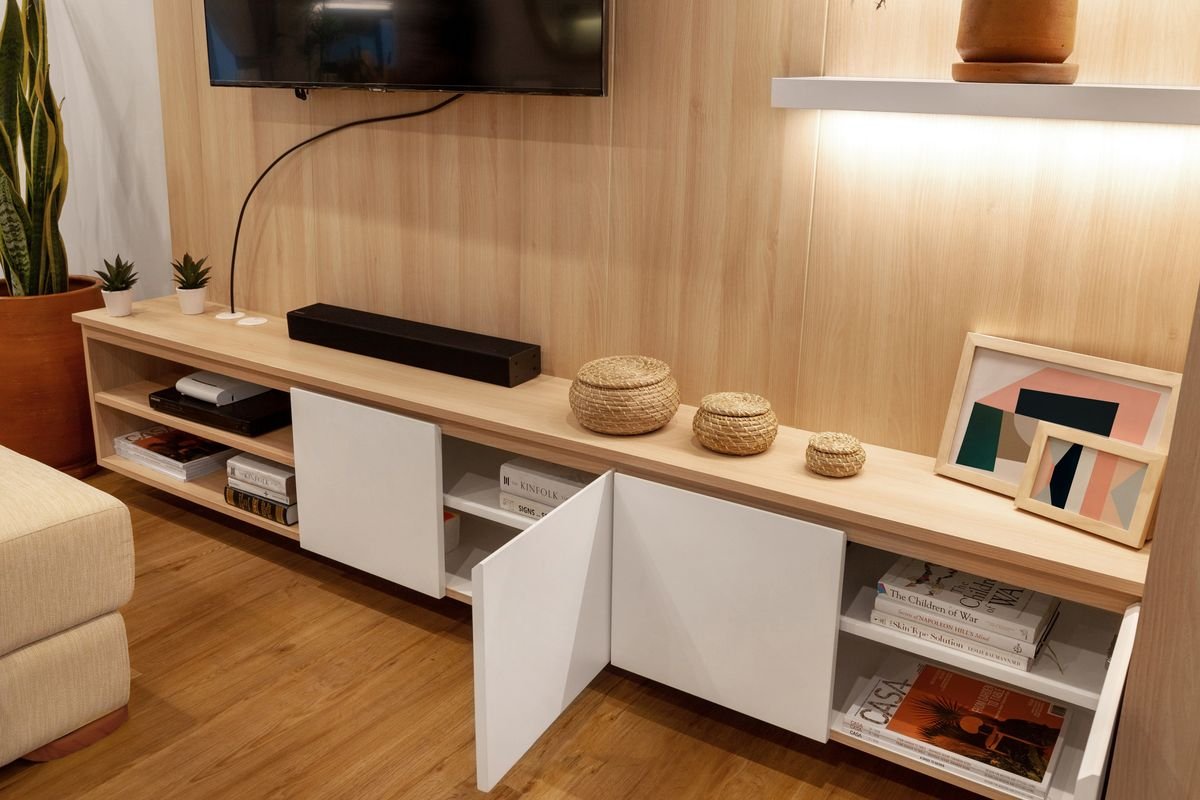
Hang one or two long shelves above the sofa for books, frames, and plants. Run the shelf to about two-thirds of the sofa length. Then the ends will not crowd a door or a window. Mix upright books with a horizontal stack, and leave a third of the shelf empty. If the wall behind the sofa needs a refresh first, see our guide to blue grey wallpaper.
Kitchen
Kitchen floating shelves hold mugs, plates, jars, and cookbooks within easy reach. Put the first shelf about 18 inches above the counter, near the height where a wall cabinet would start. Keep daily dishes on the lowest shelf and pretty items higher up.
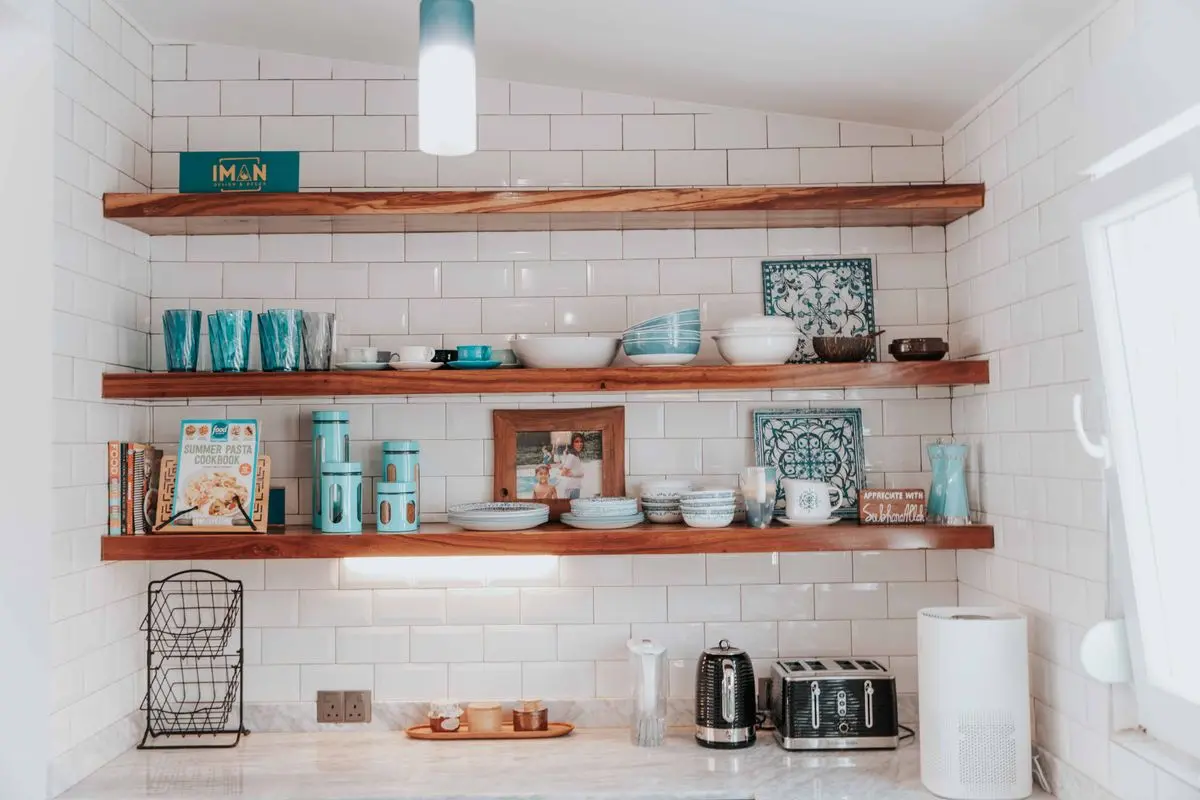
Do not hang a shelf right over the stove. Steam and grease coat everything there. A shelf beside the stove, or over a coffee station, works far better.
Bedroom
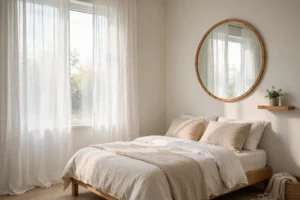
In the bedroom, a floating shelf can replace a nightstand. Two small shelves beside the bed hold a book, a phone charger, and a lamp. That frees floor space in a small room. Keep shelves above the bed light: a small plant and a frame, not heavy books.
Bathroom
A floating shelf above the toilet or beside the mirror holds towels, toiletries, and a small plant. Pick a material that copes with steam. Sealed wood, metal, or glass all work. Raw MDF does not, since it swells when damp. Keep it short, so it does not crowd the mirror or the door swing.
Home Office and Entryway
In a home office, shelves above the desk hold reference books and supplies. Hang the lowest shelf 15 to 20 inches above the desk, so you can stand up without bumping your head. In an entryway, a single shelf by the door holds keys, sunglasses, and mail.
How Much Weight Can Floating Shelves Hold?
Most floating shelves hold between 10 and 80 pounds. The real limit depends on the shelf, the bracket, and the wall. Light shelves on drywall anchors hold about 10 to 20 pounds. Standard shelves fixed into a stud hold about 20 to 40 pounds. Heavy-duty systems fixed into two studs can hold 50 pounds or more.
The wall matters more than the shelf rating. A strong shelf on a weak fixing still fails. Drywall alone holds very little. A bracket screwed into a wood stud holds far more. Brick and concrete also hold well, but they need the right anchors.
Depth changes the limit, too. A 12-inch-deep shelf strains the bracket more than a 6-inch shelf with the same load. The weight sits farther from the wall. Keep heavy items close to the wall, and light items near the front edge. A 36-inch shelf full of hardbacks can weigh 30 to 60 pounds.
How to Install Floating Shelves
Install takes under two hours for most people. You need a drill, a level, a stud finder, a pencil, and a tape measure. Check your shelf instructions first, since brackets differ.
Step 1: Mark the Spot
Hold the shelf against the wall and mark its place with a pencil. Use painter’s tape to mark the full length. Check the height from across the room before you drill.
Step 2: Find the Studs
Run a stud finder along the wall and mark each stud centre. Studs in most homes sit 16 inches apart. Fix the bracket into at least two studs. If the bracket holes do not line up with a stud, drill new holes in the bracket. Never skip the stud.
Step 3: Fix the Bracket Level
Hold the bracket on your marks and check it with a level. Mark the screw holes, drill pilot holes, then screw the bracket into the studs. Screws should bite at least 1.5 inches into the stud. If no stud sits where you need one, use heavy-duty toggle bolts rated for the load. Never trust light plastic anchors for a loaded shelf.
Step 4: Slide the Shelf On
Slide the shelf onto the rods or rail until it sits flush with the wall. Tap it gently with a rubber mallet if the fit is tight. Tighten any set screws under the shelf, then check the level again.
How High Should Floating Shelves Be?
Hang the centre of a shelf on an open wall about 57 to 60 inches from the floor. Hang the lowest shelf 10 to 12 inches above the sofa back. Keep it about 18 inches above a kitchen counter, and 15 to 20 inches above a desk. Space stacked shelves 12 to 16 inches apart.
These are design guides, not fixed rules. Measure from the furniture, not the floor. Tape the outline on the wall first and live with it for a day. Move the tape once, and you will drill once.
| Spot | Guide height | Why it works |
|---|---|---|
| Open wall | Centre 57–60 inches from floor | Sits near eye level |
| Above a sofa | 10–12 inches above sofa back | Clears heads when people lean back |
| Above a kitchen counter | About 18 inches above counter | Matches where a wall cabinet would start |
| Above a desk | 15–20 inches above desk | Keeps supplies in reach |
| Stacked shelves | 12–16 inches apart | Fits most books and plants |
For tall items, widen the gap to 14 to 16 inches. Use 10 to 12 inches for small items like spice jars. Keep gaps even within one group.
How Do You Style Floating Shelves Without Clutter?
Style a shelf like a small display, not a storage unit. Group items in odd numbers, such as three or five, since odd groups look more natural than even rows. Mix heights, so a tall vase stands beside a short stack of books. Mix materials, too. Wood, ceramic, glass, and green plants each add a different texture.
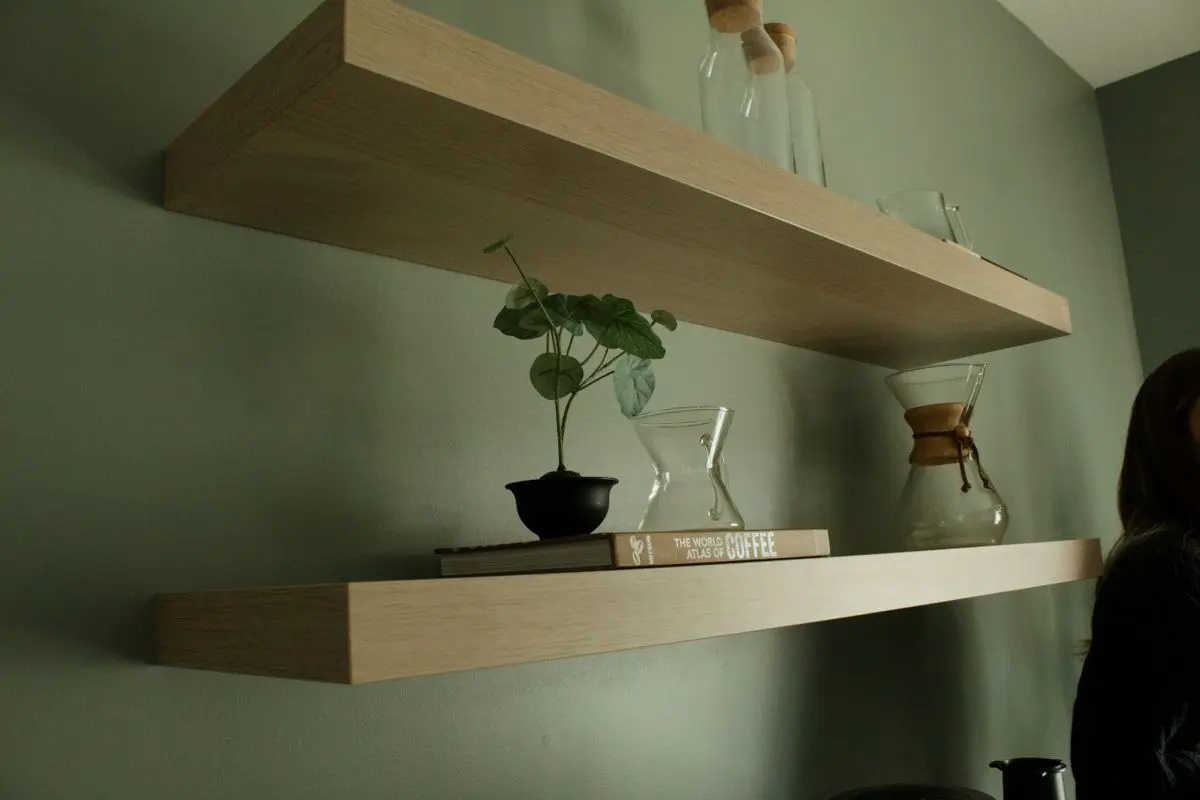
Lean frames against the wall instead of hanging them. That adds depth and lets you swap art without new holes. Put a trailing plant at one end. Stick to one colour scheme per group: two or three colours are enough.
Fill about two-thirds of a shelf and leave one-third empty. Step back often while you style. What looks fine up close can look crowded from the sofa.
Can You Hang Floating Shelves Without Drilling?
Yes, you can hang light floating shelves without drilling, but only for very light items. Heavy-duty adhesive strips suit small shelves on smooth painted walls or tiles. Most strip sets hold about 5 to 10 pounds. Wait at least 24 hours before you load the shelf. Stick to frames, candles, and small plants.
No-drill shelves suit renters. They leave no holes and come off clean. Do not stack two sets to double the load. For books, dishes, or anything heavy, drilling into studs is the only safe choice.
Are Floating Shelves Worth It?
Floating shelves are worth it when you want storage that looks light and costs little. They free floor space, suit small rooms, and cost less than a bookcase or new cabinets. A single shelf can fix a bare wall in an afternoon.
They have real limits. They hold less weight than shelves with visible brackets, and they need precise install. A shelf that is even slightly off level shows at once. Moving one leaves larger holes to patch than a picture hook. Open shelves also collect dust faster than closed cabinets.
Floating Shelves vs Bracket Shelves
Both hold items on a wall. The difference is look and load. Floating shelves hide the support. Bracket shelves show L-shaped brackets and hold more weight. Pick the look you want, then check the load you need.
| Feature | Floating shelves | Bracket shelves |
|---|---|---|
| Look | Clean, no visible support | Visible brackets, more industrial |
| Weight | Lower, often 10–40 pounds per shelf | Higher, brackets spread the load |
| Install | Needs precise levelling | More forgiving, brackets adjust |
| Best for | Display, light storage, small rooms | Heavy books, tools, pantry goods |
For a full set of cookbooks, bracket shelves are safer. For a calm wall with a few books and plants, floating shelves win on looks.
Frequently Asked Questions
Can floating shelves hold heavy books?
Yes, if the bracket is fixed into wall studs and rated for the load. A 36-inch shelf of hardbacks can weigh 30 to 60 pounds. Keep heavy books on the lowest shelf, close to the wall.
Do floating shelves damage walls?
Yes, a little. Install needs several screw holes, and removal leaves holes and small dents. Fill the holes, sand them smooth, and touch up the paint. That beats repairing a wall after a shelf has ripped out.
What is the best wood for floating shelves?
Solid hardwoods such as oak, maple, and walnut suit most homes. They are strong, resist bending, and fit modern and rustic rooms. Pine is cheaper but dents easily. MDF sags under heavy books and swells in damp rooms.
Can I put floating shelves in the bathroom?
Yes, if you pick the right material and keep the shelf short. Sealed wood, metal, or glass cope with steam. Raw MDF swells when damp. Hang it where splashes do not reach, such as above the toilet. Keep toiletries in a tray.
How do I fix a sagging floating shelf?
First, take everything off the shelf. A shelf that tips forward often has a bracket that is not seated flat. A thin shim behind the bracket can true it up. If the rods have bent, the bracket is too light. Fit a heavier bracket and lighten the load.

1 Comment
Pingback: How to Decorate a Small Bedroom: 9 Ideas That Make It Feel Bigger - Miss Amara