

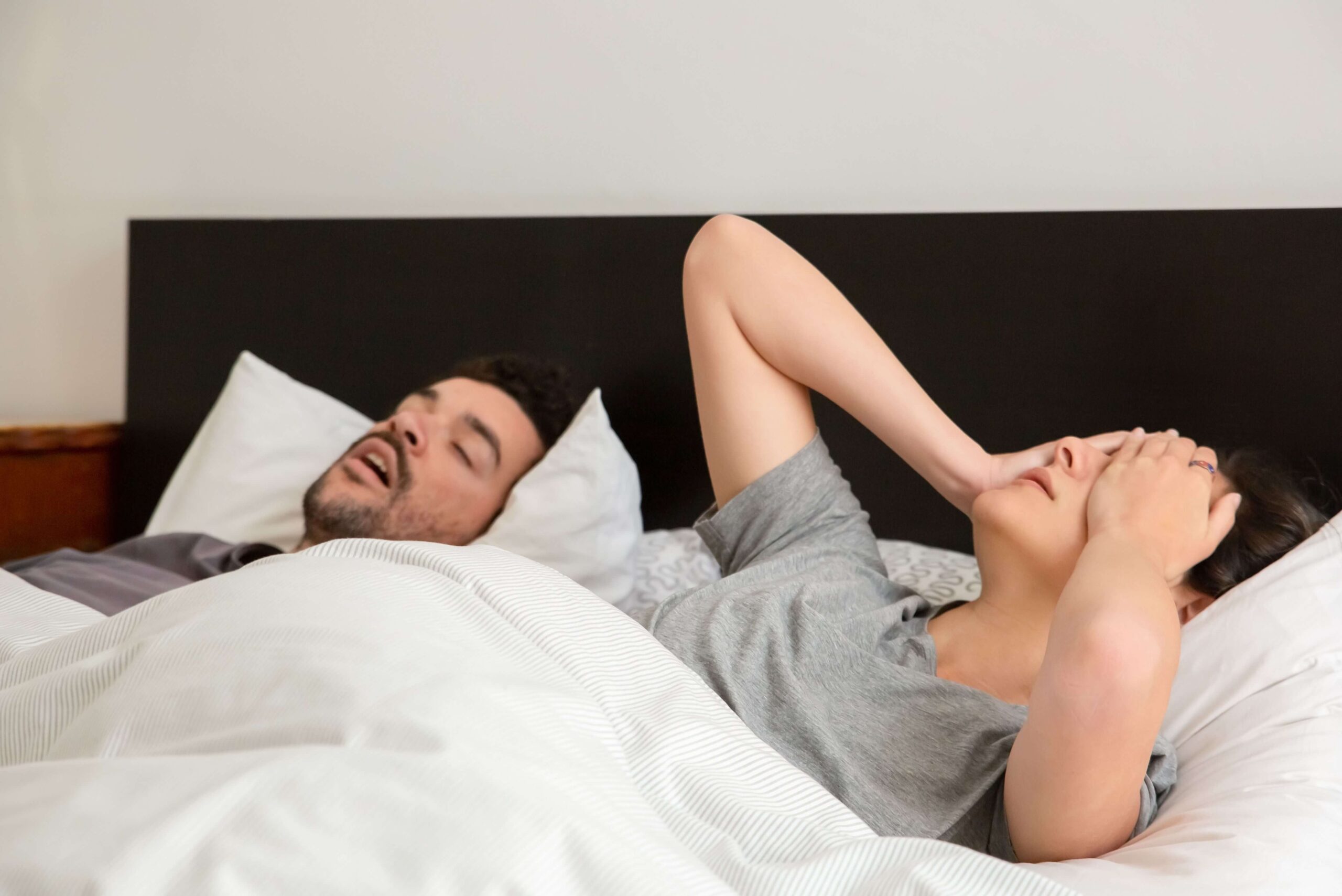
Snoring happens when relaxed tissue in your airway, usually the soft palate, the back of the tongue, or the tonsils, vibrates as air squeezes past it during sleep. The fix depends entirely on which of those structures is causing the noise, which is why a random tip from a friend often does nothing for you. Figure out the likely source first, then match the fix to it.
Why Generic Advice Falls Flat
Most snoring guides hand you the same five tips: lose weight, sleep on your side, cut the alcohol, use a humidifier, try nasal strips. None of that is wrong, but none of it explains why a nasal strip does nothing for someone whose airway is collapsing at the back of the tongue, or why a mandibular advancement device (a mouthguard-like device that shifts your lower jaw slightly forward) can stop snoring in one person and feel like a jaw workout for another with zero results.
The tissue that’s vibrating determines what actually helps. Nasal congestion pushes air through a narrower opening and forces mouth breathing, which makes the soft palate flap more. A large tongue base or a jaw set slightly back (retrognathia) narrows the airway lower down, closer to the throat. Alcohol and sedatives relax the muscles that normally hold the airway open regardless of anatomy, which is why people who never snore sober can snore loudly after a few drinks. Sleeping on your back lets gravity pull the tongue backward into the airway, which is why side-sleeping helps some people and does nothing for others whose collapse isn’t position-dependent.
Matching the Fix to the Cause
Start by asking a simple question: does the snoring change with position, alcohol, or a stuffy nose? If it’s worse flat on your back and better on your side, positional therapy is worth trying before anything else. A tennis ball sewn into the back of a t-shirt, or a wedge pillow that keeps you angled, works by making the supine position uncomfortable enough that you shift without waking up fully. It costs almost nothing and either works within a few nights or it doesn’t.
If nasal congestion is the trigger, whether from allergies, a cold, or a naturally narrow passage, nasal strips or an internal nasal dilator can widen that opening enough to reduce mouth breathing. A saline rinse before bed clears mucus that a strip alone won’t fix. None of this touches snoring that originates further back in the throat, so if you’ve tried nasal products for two weeks with no change, the problem likely isn’t your nose.
If alcohol or sedating medication is the pattern, stopping the substance a few hours before bed usually resolves it directly, since the mechanism is muscle relaxation rather than a structural issue. This is one of the few snoring causes with a genuinely reliable fix, because you’re removing the trigger rather than compensating for anatomy.
If snoring happens regardless of position, sobriety, or nasal clarity, the airway narrowing is likely structural, tongue base, soft palate length, or tonsil size, and that’s where mandibular advancement devices or tongue-stabilizing devices come in. These reposition the jaw or tongue to open the airway mechanically. Over-the-counter versions exist, but a dentist who specializes in sleep medicine can fit a custom one that works better and irritates the jaw joint less over time.
Where People Waste Money and Time
The most common mistake is buying a product based on what worked for someone else rather than matching it to your own trigger. Someone whose snoring is alcohol-driven doesn’t need a $60 mandibular device, and someone with tongue-base collapse won’t get anywhere with nasal strips no matter how many nights they try. Test one variable at a time. Skip alcohol for a week and track it. Try side-sleeping for a week separately. Mixing changes together makes it impossible to know what actually helped.
Mouth taping deserves a specific warning here because it’s become popular fast without the evidence to back it. The idea is that taping your mouth shut forces nasal breathing and reduces vibration. A 2025 systematic review of the available studies found the evidence too limited and inconsistent to recommend it, and flagged a real risk: if you have any nasal obstruction, sleep apnea, or your airway collapses at night, sealing off your mouth removes your backup breathing route and can worsen oxygen drops rather than help them. It’s not universally dangerous, but it’s not a safe default either, and it does nothing to address whatever tissue is actually causing the vibration.
When This Stops Being a Snoring Problem
Loud, chronic snoring on its own is usually annoying rather than dangerous. It becomes a different problem when it comes with gasping or choking sounds during sleep, witnessed pauses in breathing, morning headaches, or daytime sleepiness heavy enough to affect driving or concentration. Those are signs of obstructive sleep apnea, where the airway doesn’t just narrow, it closes completely for seconds at a time, and it needs a sleep study and a doctor, not a wedge pillow. None of the home fixes above are treatment for sleep apnea, and using them as a substitute for diagnosis delays catching something that carries real cardiovascular risk over time.
Weight is worth mentioning honestly here too. Extra tissue around the neck narrows the airway mechanically, and for people carrying weight there specifically, losing even a modest amount can measurably reduce snoring. But plenty of naturally thin people snore just as loudly, usually from jaw structure, tonsil size, or a deviated septum, and no amount of weight loss will fix an anatomical issue that was never about body fat in the first place.
Comparing the Main Options
| Method | Best For | Doesn’t Help |
|---|---|---|
| Positional therapy (wedge pillow, tennis ball) | Snoring that’s worse on your back | Snoring that happens in every position |
| Nasal strips / dilators | Congestion-driven, nasal-source snoring | Throat or tongue-based collapse |
| Avoiding alcohol/sedatives before bed | Snoring that appears mainly after drinking | Anatomical or positional snoring unrelated to substances |
| Mandibular advancement device | Tongue base or jaw-related collapse | Purely nasal congestion |
| Mouth taping | Very limited evidence even in ideal cases | Anyone with nasal obstruction or undiagnosed sleep apnea; can be unsafe |
| Sleep study / CPAP | Diagnosed or suspected sleep apnea | Not a first step for simple, isolated snoring |
Frequently Asked Questions
Can snoring go away on its own? Sometimes, if it’s tied to something temporary like a cold, seasonal allergies, or a few nights of drinking. Chronic snoring tied to anatomy, weight, or airway structure typically doesn’t resolve without a specific change.
Do anti-snoring pillows actually work? They work for the subset of people whose snoring is position-dependent, by keeping you off your back. If your snoring happens on your side too, a different pillow won’t change the underlying cause.
Is snoring always a sign of sleep apnea? No. Most snoring is not sleep apnea. The distinction is in the pattern: apnea involves actual pauses in breathing, gasping, or choking, not just noise. Snoring without those signs is usually a tissue vibration issue, not an airway closure issue.
Why did nasal strips work for a while and then stop? This usually means the underlying cause shifted, seasonal congestion cleared up and something else (position, weight, alcohol) became the dominant factor, or the original congestion source (like allergies) came back stronger and outpaced what the strip can widen.
Should partners just sleep in separate rooms? It solves the immediate sleep disruption but doesn’t address the snoring itself, and it can mean a real medical issue like sleep apnea goes unnoticed longer since the partner isn’t there to observe breathing pauses. It’s a reasonable short-term step, not a long-term fix.

1 Comment
Pingback: La Roche-Posay vs Neutrogena for Acne: Which Wins?