

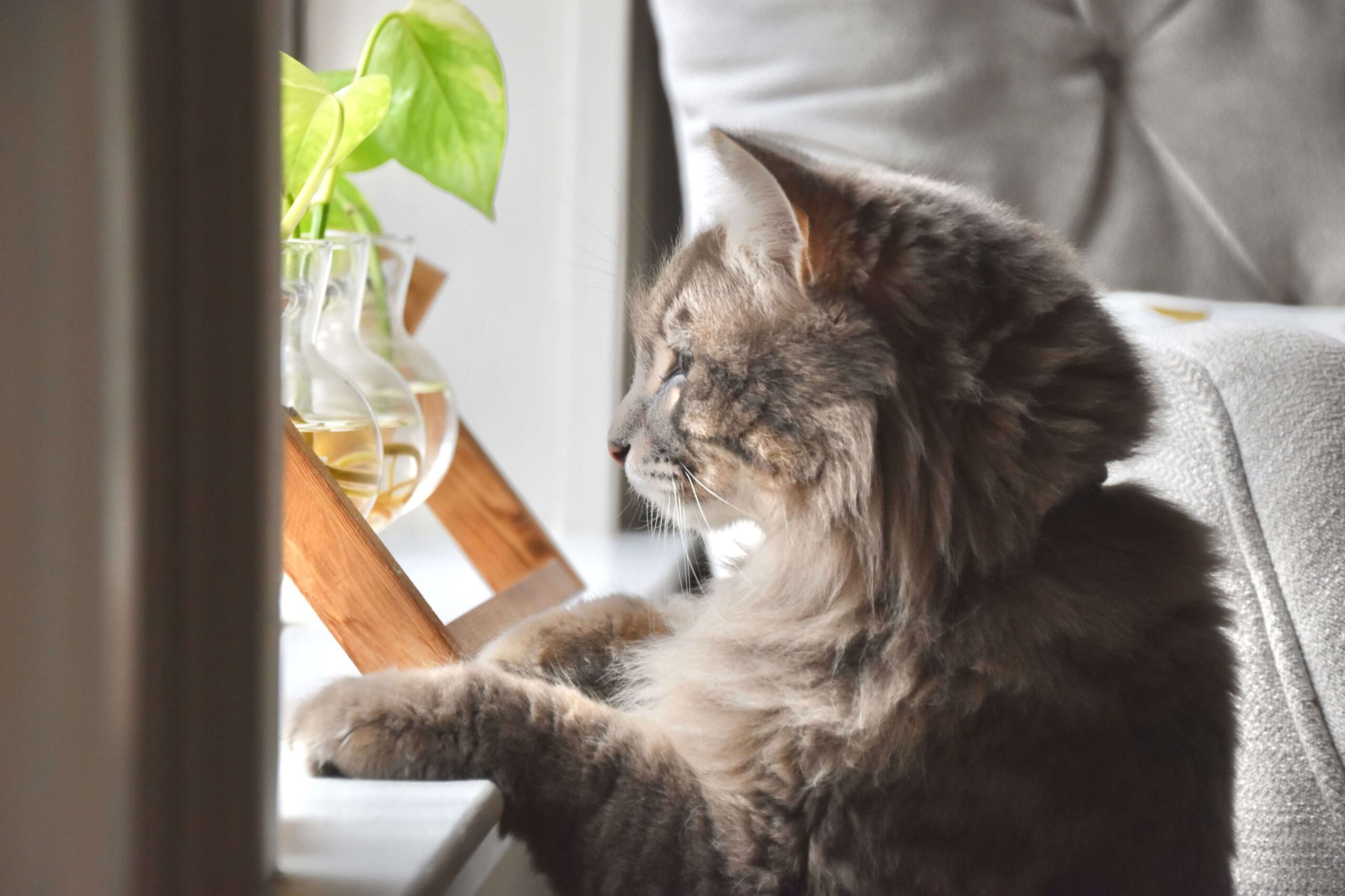
Yes, pothos is toxic to cats, and most cases start the same way: a cat chews a leaf, then immediately starts drooling and pawing at its mouth. The reassuring part is that this reaction, while clearly painful for your cat, is a local tissue irritation rather than a poison that spreads through the body, so serious outcomes are uncommon in otherwise healthy cats.
What You’re Actually Seeing
If your cat just bit into a pothos leaf, the first signs usually show up within minutes, not hours. Watch for heavy drooling, pawing or rubbing at the mouth, head shaking, and a sudden reluctance to eat. Some cats bolt straight for the water bowl. Vomiting often follows shortly after, sometimes with visible bits of leaf in it.
That fast timeline is a clue about what’s actually happening. This isn’t a slow-acting poison working its way through your cat’s system. It’s closer to a mouth injury that hits instantly, which is exactly why the reaction looks so dramatic even though most cats recover within a few hours.
Why It Hurts So Much
Pothos leaves, stems, and sap contain insoluble calcium oxalate crystals, tiny needle-shaped structures called raphides, packed into specialized cells throughout the plant. Biting down ruptures those cells and drives the crystals straight into the soft tissue of the mouth and throat.
Because the crystals are insoluble, they don’t get absorbed into the bloodstream the way many toxins do. The injury stays localized, mouth, throat, sometimes the upper digestive tract, rather than affecting organs elsewhere in the body. That’s the mechanism behind why pothos causes intense short-term pain but rarely anything more serious.
What To Do In The Next 10 Minutes
- Get your cat away from the plant so it can’t take another bite while you’re handling the first one.
- Check the mouth if your cat will tolerate it, and gently remove any visible plant material.
- Rinse the mouth with fresh water, or let your cat drink freely, to help flush out crystal fragments.
- Watch closely for the next two hours, specifically for breathing changes, repeated vomiting, or visible swelling around the mouth or throat.
- Call your vet or an animal poison control line even if symptoms seem mild. The ASPCA Animal Poison Control Center (888-426-4435) and the Pet Poison Helpline (855-764-7661) are both available 24/7, though a consultation fee typically applies.
If you notice any swelling that looks like it’s affecting your cat’s breathing, skip the wait-and-watch approach entirely and get to an emergency vet.
How Worried Should You Actually Be?
This is where a lot of plant-toxicity lists do cat owners a disservice by lumping everything under one “toxic” label. Pothos sits in a specific category of houseplants: painful but rarely dangerous. Philodendron, peace lily, dieffenbachia, and alocasia all work through the same calcium oxalate mechanism and cause a similar reaction, oral pain, drooling, occasional vomiting, generally resolving on its own.
True lilies, meaning Lilium and Hemerocallis species specifically, are a completely different situation. They cause acute kidney failure in cats through a mechanism that isn’t fully understood, and that’s a genuine emergency requiring immediate treatment, even before symptoms appear. If your cat has access to both a pothos and a true lily, treat those two situations very differently.
| Plant | Mechanism | Typical Severity |
|---|---|---|
| Pothos | Calcium oxalate crystals (mechanical irritant) | Painful, usually self-limiting |
| Philodendron | Calcium oxalate crystals | Painful, usually self-limiting |
| Peace lily | Calcium oxalate crystals | Painful, usually self-limiting |
| Dieffenbachia | Calcium oxalate crystals | Painful, usually self-limiting |
| True lily (Lilium, Hemerocallis) | Unknown nephrotoxin | Life-threatening, emergency |
Making Your Home Genuinely Cat-Safe
Supervision alone tends to fail with houseplants, since the reaction happens the moment a cat bites down, long before you’d normally notice anything going on. A pothos sitting on an open shelf is available all day, not just when you’re watching.
Hanging planters and high shelves help with cats that aren’t determined climbers, but plenty of cats treat “high shelf” as a challenge rather than a deterrent. If your cat is a persistent chewer of anything green, the more reliable fix is swapping pothos for something like a spider plant or Boston fern, both non-toxic and similar in trailing growth habit, rather than relying on placement to keep working long-term.
Keep an eye on trimmed cuttings too. A stem clipping sitting in a glass of water on the counter carries the same crystal-laden sap as the growing plant, and it’s often more accessible to a curious cat than the plant itself.
Frequently Asked Questions
Will one bite send my cat to the emergency room?
Almost never, on its own. Most single-bite cases involve drooling, pawing at the mouth, and maybe some vomiting, all of which typically settle within a few hours without treatment beyond monitoring. The exception is any visible swelling affecting breathing, which does need immediate care.
Can pothos exposure cause long-term damage?
Not typically. Because the crystals cause a local injury rather than a systemic one, there’s usually no lasting effect once the initial irritation resolves. Repeated exposure over time could contribute to chronic mouth irritation in a cat that keeps chewing the plant, but a single incident rarely leaves lasting damage.
I found chewed leaves but didn’t see my cat eat them. What now?
Treat it the same as a witnessed bite and watch for the usual signs: drooling, pawing at the mouth, vomiting. If your cat is acting normal an hour or two later with no symptoms, it’s unlikely much damage was done, but keep an eye out through the day.
Is it dangerous for my cat to just be near a pothos plant, without eating it?
No. The toxicity only triggers when the plant tissue is actually chewed or bitten into, which ruptures the crystal-containing cells. Brushing past the plant or sniffing it doesn’t cause a reaction.
Do I need to get rid of all my houseplants if I own a cat?
No, just the genuinely dangerous or unnecessary-risk ones. Plenty of common houseplants, spider plants, Boston ferns, calathea, and most palms, are non-toxic to cats, so you can keep a full plant collection while swapping out species like pothos, philodendron, and true lilies for cat-safe alternatives.

1 Comment
Pingback: Can Dogs Eat Blueberries? Safety, Benefits & Tips