



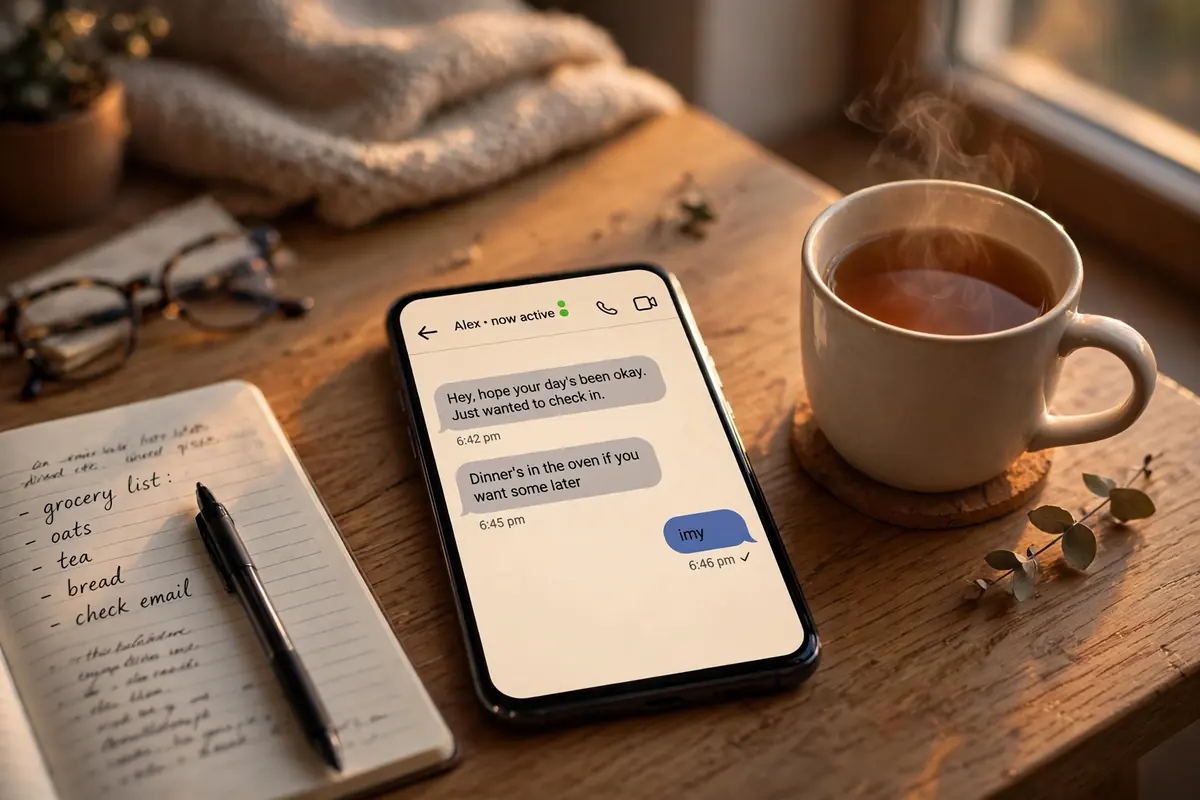
If someone just sent you “imy” and you paused before replying, here is the short answer. What does imy mean? It means “I miss you.” People type those three letters in texts and chats to tell someone they have been thinking about them and wish they were around, or at least talking more often. It works as a complete message on its own, and it can also sit inside a longer sentence, like “imy so much, call me when you’re free.” The tone is warm and personal, so you will mostly see it between partners, close friends, and family, not in formal messages.
What Does IMY Mean in Texting?
What does imy mean in texting is the question most people search, because the abbreviation rarely comes with any explanation. IMY is an initialism. You say the letters one by one — I, M, Y — and each one stands for the first letter of “I miss you.”
People reach for it in familiar moments. For example, a friend you have not seen in months might open with “imy, we need to catch up.” A partner far away might end the night with a plain “imy” and a heart emoji. A sibling who moved away might drop it into the family chat after seeing an old photo.
In other words, the words stay the same, but the reason shifts. Sometimes the sender wants to make plans, sometimes they just want you to know you crossed their mind, and sometimes it is a soft way to restart a quiet conversation.
You will see it in lowercase as “imy” just as often as in caps. Lowercase feels softer, while caps can feel stronger or like shouting, so keep caps messages short.
IMY Meaning in Chat and on Social Media
The imy meaning in chat is the same as in texting, but the setting changes how public or playful it feels. On WhatsApp and Messenger, it usually stays private and personal. On Snapchat, it appears in quick chats or captions and can carry a light, flirty edge. On Instagram, you might see it in DMs, story replies, or under a post from someone who has been away.
On TikTok, people comment “imy” on throwback clips or on videos from a creator who has not posted in a while. There, it can mean missing a moment, not only one person.
Even so, if the chat is about feelings, distance, or reconnecting, read IMY as “I miss you.” Other expansions appear in technical lists, but they almost never fit a casual chat.

Is IMY Romantic, Friendly, or Both?
IMY can be romantic, friendly, or family-warm. The relationship and the words around it tell you which one it is.
From a partner or someone you are dating
From a partner, IMY usually carries real longing. It often arrives late at night, during a stretch apart, or right after a trip ends. Extra words raise the weight. “IMY so much” signals more than a polite check-in, especially with affectionate emojis or a pet name.
From someone you have just started dating, it can be a gentle test of interest. That is interest, not a promise, so a warm and honest reply is enough.
From a close friend
Between friends, IMY is normally lighter. It often pairs with a plan or a joke: “imy bro, game night soon?” In a group chat, an “imy guys” after a reunion photo is a shared, nostalgic note, not a private confession.
From family
With family, IMY sounds sentimental in a simple way. Parents, siblings, and cousins use it around holidays, after moves, or during long stretches without a visit. It just means home feels far away right now.
One caution covers all three cases. An ex sending IMY out of the blue can feel loaded. It may be nostalgia or a real wish to reconnect, so judge it by your history and by what you actually want.
Where IMY Comes From
IMY belongs to the shorthand that grew with early texting and instant messaging in the early 2000s, alongside forms like LOL, BRB, and TTYL. Typing was slower, messages were short, and people built quick codes for phrases they used often. “I miss you” was common enough to earn its own three letters.
How-To Geek, citing Google Trends, notes that searches for “IMY” grew from 2004 and rose again at the start of the 2020 COVID-19 pandemic, when people were apart and relying on texts. IMY did not start on Snapchat or TikTok; those apps picked it up later from texting.
How to Use IMY in Your Own Messages
Send IMY to someone you already have a real bond with, and keep it honest. A short “been thinking of you, imy” works well. A photo, a shared song, or a memory makes it feel personal rather than generic.
Timing matters too. IMY lands best after some time apart, or when something reminds you of that person. Sent ten times a day, it can feel anxious rather than affectionate, so save it for moments when you mean it, and do not send it just to get a fast reply.
If constant messages are pulling at your attention instead, our guide on how to stay focused with focus modes and app blockers may help.
IMY vs. IMU, ILY, and Other Similar Short Forms
IMY vs. IMU: IMU can mean the same thing, “I miss you,” with U standing in for “you,” much like texting “u” on its own. IMY is more common and more widely recognised. IMU also has many meanings outside chat, including a sensor called an inertial measurement unit, so it is far more likely to confuse a reader. If you want to be understood quickly, choose IMY.
IMY vs. ILY: ILY means “I love you,” a stronger and different claim. Missing someone is about absence. Loving someone is about the feeling itself, near or far. Mixing the two up changes the message a lot, so check your letters before you send, especially early in a relationship.
IMY vs. MY: A standalone “my” is almost never used for “miss you,” because “my” is already an everyday English word. Readers will take it as the possessive word first, and your meaning will get lost.
Common Variations of IMY
Writers add letters to adjust the strength, or to turn IMY into a reply:
- IMYSM — I miss you so much. Stronger than plain IMY, often used with a partner or very close friend.
- IMYT — I miss you too. The standard reply form, also written as IMY2.
- IMYM — I miss you more. Playful and a little competitive, usually part of a back-and-forth.
- IMYSB — I miss you so bad. Informal and intense, best kept for people who know your style well.
- MYSM — Miss you so much. The same idea with the “I” dropped, seen in very casual chats.
How to Reply When Someone Sends You IMY
Your reply should match your real feelings, not just mirror the sender’s energy.
If you feel the same, say so plainly. “IMYT” works, and “I miss you too, let’s meet this weekend” works even better because it moves things forward.
If you want to keep it warm but light, try “aww, same here” or “miss you too, it’s been ages.” That tone suits friends and family well.
If you do not feel the same way, be kind and be clear. A simple “that’s sweet, hope you’re doing well” acknowledges the message without promising feelings you do not have. Do not reply “IMYT” just to avoid an awkward moment.
When You Should Not Use IMY
Keep IMY out of work and formal writing. It does not belong in emails to a manager, messages to a client, job applications, or customer support chats. There, it looks too personal and too casual at once, and some readers may not know it at all.
Avoid it with new acquaintances too. Telling someone you barely know that you miss them can feel rushed, because there is not yet a shared history to miss.
Finally, skip it during a serious disagreement. Dropping “imy” into an unresolved argument can look like dodging the actual issue. Settle the problem first.
Frequently Asked Questions
What does IMY mean in texting from a girl or a guy?
It means “I miss you” in both cases. Gender does not change the definition. What changes is context: the same “imy” can read as romantic from a partner, friendly from a close friend, or nostalgic from an ex.
Is IMY the same as IMYSM?
No, IMYSM is stronger. IMYSM means “I miss you so much,” so the added letters raise the intensity. Plain IMY suits everyday check-ins, while IMYSM fits longer separations or more emotional moments.
Can I use IMY for a friend, or is it only romantic?
You can absolutely use it for a friend. IMY is not only romantic. Friends use it after long gaps, moves, or cancelled plans, and there it simply shows affection and a wish to catch up soon.
What does it mean if someone sends IMY with no other words?
A lone “imy” usually means the feeling is the whole message. The sender was thinking of you and wanted you to know. A short, warm reply is fine.
Is it okay to send IMY first?
Yes, if you already know the person well. Sending it first to a close friend, partner, or family member is a kind way to reconnect. With someone new or a former partner, pause first.
This guide is part of our Tech Explainers collection — see the full guide for more.
Related reading: How to remove scratches from glass