


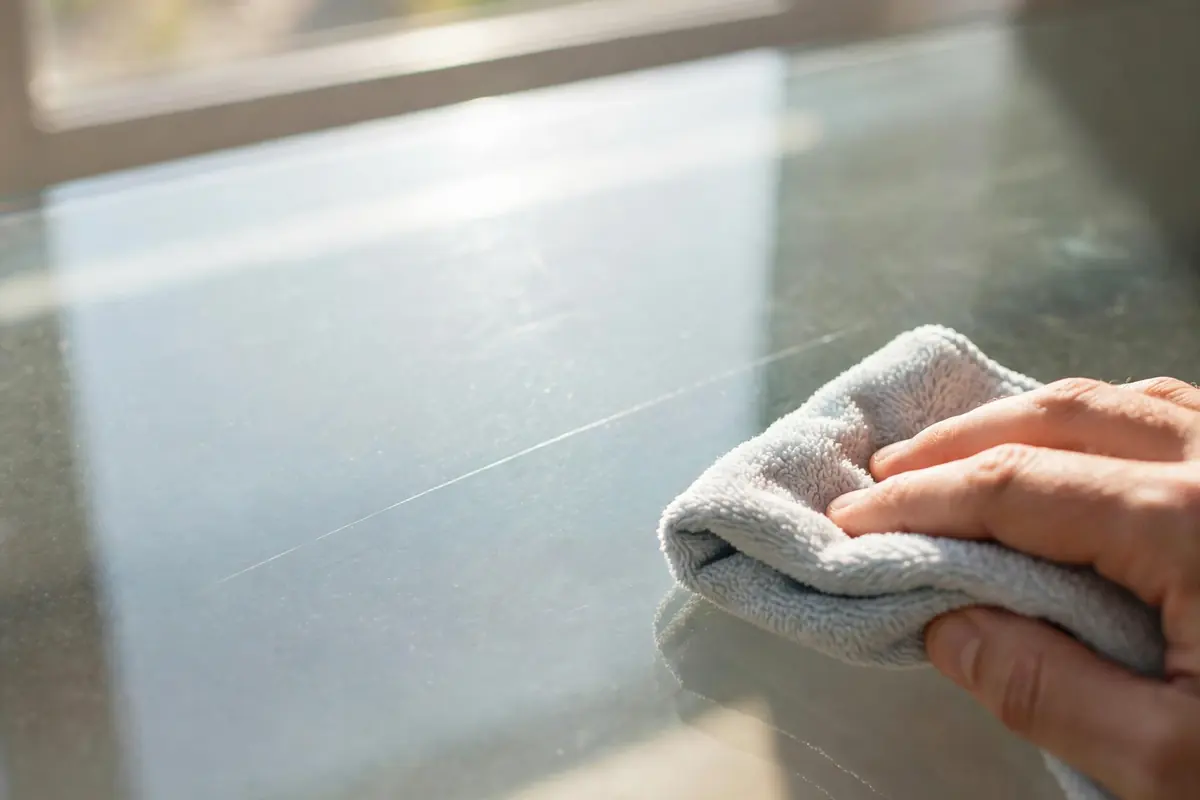
You can remove light scratches from glass at home, but only if the scratch is shallow. Run a fingernail across it first. If your nail glides over the mark and does not catch, a mild polish will often fade it or remove it. Start with white, non-gel toothpaste for the finest marks. Try a baking soda paste if that fails. For light to moderate scratches on plain window or table glass, a cerium oxide glass polish used with a felt pad gives the strongest DIY result. If your nail catches in the groove, stop. That scratch is too deep for household pastes, and grinding it out can distort the glass or crack it. Professional polishing or replacement is the safer choice then.
That test tells you which method matches the damage, so you do not waste an hour on a scratch that will not polish out by hand.
Start With the Fingernail Test
Clean the glass before you judge the scratch. Dust can look like damage, and grit left on the surface will cause new marks once you start rubbing.
Wash with glass cleaner or warm soapy water, dry with a microfiber cloth, then view the scratch under good light from two or three angles. Some marks only show in side light.
Now drag a fingernail gently across the scratch. If it feels smooth, the damage sits near the surface, and polishing has a real chance. If it catches, even slightly, the groove is deeper. Household methods may soften its edge a little, but they will not level the surrounding glass down to the bottom of that groove.
Also check for cracks, chips, and spreading lines. Those are not scratches. Do not polish cracked glass, especially on a shower door, oven door, or window that takes pressure or heat.
For another cupboard-ingredient cleaning job, see our guide on whether vinegar kills mold.
What You Need Before You Start
Gather a microfiber cloth, painter’s tape, glass cleaner, and a small bowl. Add white non-gel toothpaste or baking soda for the gentle methods.
For cerium oxide work, you will also need powder, water, a spray bottle, and a felt polishing pad. A low-speed drill helps, but keep the speed low — most guidance keeps it at or below about 1,500 rpm. Wear eye protection with a drill, plus gloves and a dust mask for dry powder. Tape off nearby frames and trim.
Mark the scratch from the back side where you can. Once white slurry covers the glass, the scratch almost disappears from view while you work.
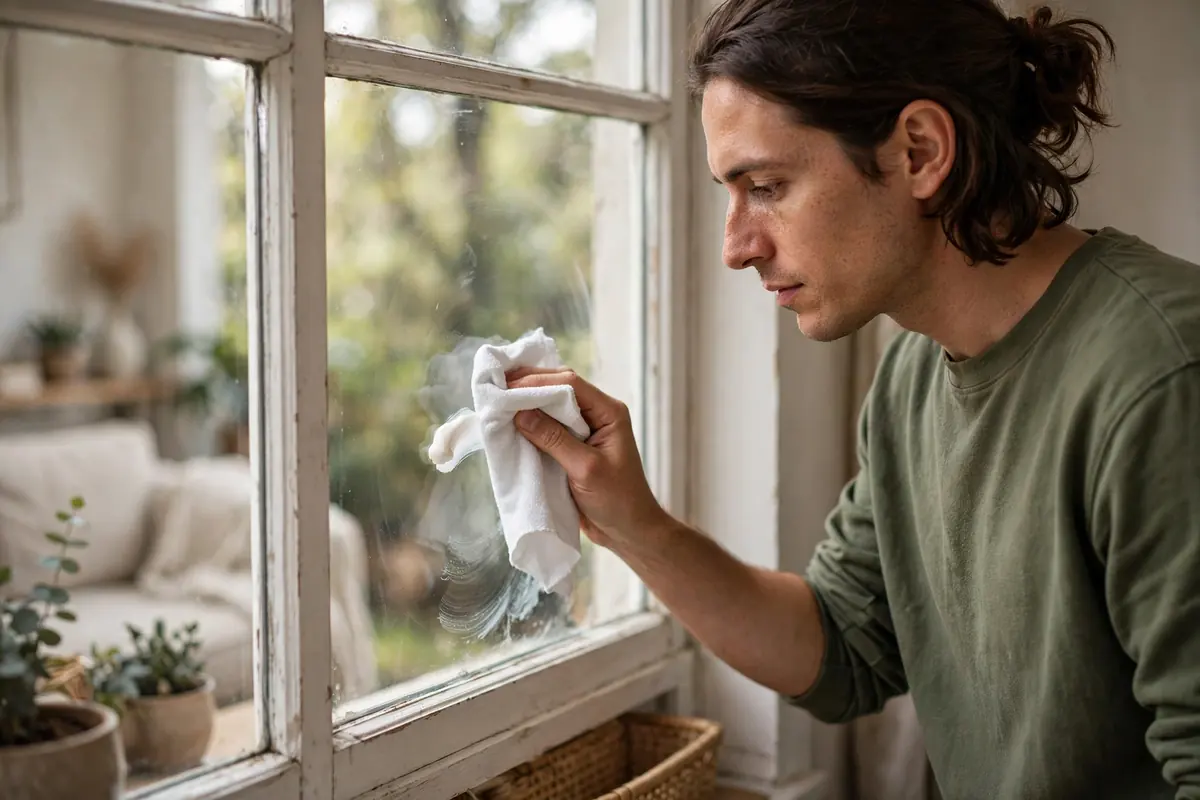
How to Remove Scratches From Glass With Toothpaste
This is the gentlest place to start, and it suits hairline marks on mirrors, glass tables, and plain windows. It works because white toothpaste contains a very mild abrasive. That abrasive levels a tiny amount of glass around a shallow scratch.
Use plain white toothpaste, not gel. Gel types lack the grit you need. Skip this method on coated eyeglasses, phone screens, and camera lenses, where polishing can strip the coating.
Steps for the toothpaste method
- Clean and dry the glass fully.
- Put a pea-sized dab of toothpaste on a soft cotton or microfiber cloth.
- Rub in small circles over the scratch for about 30 seconds to a minute.
- Wipe the area clean with a damp cloth and dry it.
- Check the scratch in angled light.
If the mark looks lighter, you can repeat the process two more times. After three rounds with no real change, move on rather than rubbing harder. Extra pressure does not make toothpaste stronger. It only raises the chance of haze.
Set expectations honestly. Toothpaste often improves a faint scuff more than it truly removes it, and a scratch that vanishes from most angles is a good result here.
Baking Soda Paste for Light Scratches
Baking soda works in a similar way, and some people find the paste easier to control. Mix equal parts baking soda and water until you get a thick, pudding-like paste.
Dab it onto a microfiber cloth and rub over the scratch in small circles with light pressure for about a minute. Wipe away residue with a cloth dampened with lukewarm water, then dry and inspect.
Repeat once or twice if the scratch is fading. Baking soda will not fix deep grooves, and it leaves fine powder in textured frames, so rinse around edges. Clean fully between methods, too — leftover grit can contaminate the next cloth.
Metal Polish and Clear Nail Polish: Two Different Jobs
These two do opposite things. Metal polish polishes the glass itself. Nail polish fills the scratch so you see it less.
A metal polish such as Brasso can help with surface marks on plain glass. Clean first, apply a small dab to a soft cotton cloth, and buff in circles. Wipe clean and check often. Test it on a hidden corner first, and avoid coated or delicate glass unless the label says it is safe there.
Clear nail polish does not remove glass at all. Lay the glass flat, paint a thin line into the scratch, and let it dry fully — sources differ, from about an hour to a couple of hours, so follow the bottle. Then wipe excess around the scratch with a cloth lightly dampened with nail polish remover. Treat this as a cosmetic hide for a mirror or table, not a repair. Frequent cleaning will wear it away.
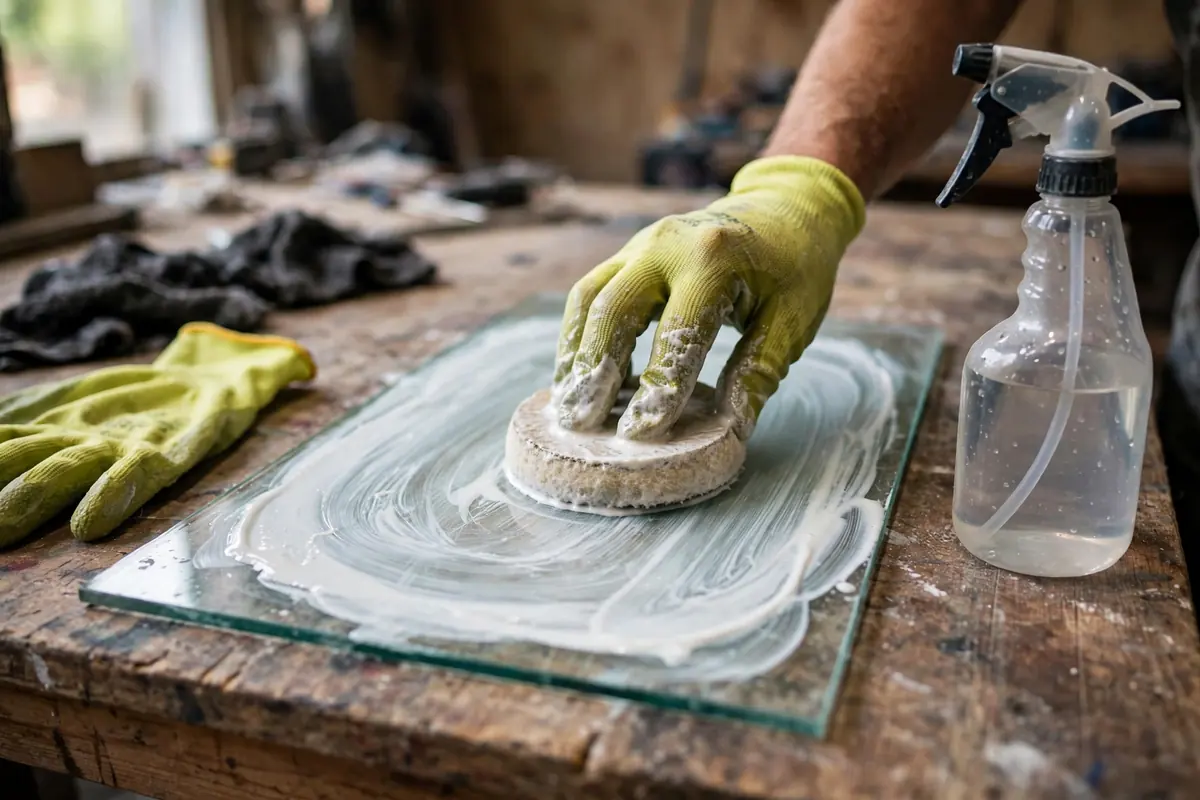
Cerium Oxide Glass Polish for Light to Moderate Scratches
If toothpaste and baking soda did little, cerium oxide is the next step. Glaziers and optical workers use it as a glass polishing compound, and it outperforms kitchen pastes on plain glass.
Buy powder sold for glass polishing — a small amount covers a single scratch. Mix it with clean water into a thin slurry, about the consistency of milk or thin cream.
Steps for cerium oxide polishing
- Clean the glass thoroughly and let it dry.
- Mark the scratch location on the back side with tape.
- Load the slurry onto a damp felt pad fitted to your drill.
- Work the pad over the scratch with light, even pressure. Move it back and forth and side to side, and do not park it in one spot.
- Keep the surface wet the whole time. Mist it with water whenever it starts to look dry.
- After a few minutes, wipe off the slurry with a damp cloth. Dry the spot and check your progress.
- Repeat in short rounds if the scratch is fading.
Heat is the main danger here. Fast speeds, dry pads, and heavy pressure all build heat, and hot glass can crack. Keep the glass warm at most, never hot. Pause often, add water, and let the compound do the work.
A light scratch may clear in one round. A moderate one may need two or three rounds, with cleaning between each. Polishing one tiny area too long can create a shallow dip that bends light, so spread your passes a little beyond the scratch itself.
Skip cerium oxide on phone and tablet screens. Their coatings and touch layers sit at the surface, and drill heat adds risk. A screen protector often hides a faint phone scratch far better, because its adhesive fills the groove.
Which Glass Types Need Extra Care?
Not all glass responds the same way, and the object matters as much as the scratch.
Plain windows and single panes are the best DIY candidates — flat, accessible, and usually uncoated. Glass tables are also workable for light marks. Check the underside first, since some use coated or frosted glass on one face.
Shower doors need caution. Most use tempered glass, made to break into small blunt pieces under extreme stress. Light marks can sometimes be buffed gently, but deep scratches weaken the surface. If the door has a protective coating, ask the maker first, because abrasives can strip it in patches.
Watches split by crystal type. Plain mineral glass may respond to careful hand polishing. Sapphire is far harder and rarely improves with home pastes. Smartwatch glass adds touch sensors below the surface, so deep polishing can harm function.
Eyeglasses need the most restraint. Most modern lenses are plastic or coated glass, not bare glass, and pastes can dull anti-glare coatings. Unless you know the lens is uncoated glass, replacement is the sensible answer. Double-pane windows, oven and microwave doors, and vehicle glass also belong with a professional.
Glass also shows up in bigger home projects — see our explainer on what a conservatory is if you are planning one.
Mistakes That Make Glass Scratches Worse
The most common mistake is reaching for something too coarse. Scouring pads and standard steel wool will add new scratches. The only steel wool grade ever suggested for glass is #0000, the finest grade, and even that demands a clean, rust-free pad. For most readers, a cloth and polish are safer.
Dry rubbing is another problem. A dry pad drags grit and builds heat, so keep pastes damp and slurry wet. Skipping the cleaning step hurts too — one grain of sand under your cloth can undo ten minutes of work in a single pass.
Finally, many people chase a deep scratch until the area turns hazy or wavy. A faint line you can live with beats a cloudy patch you cannot undo.
To prevent new marks, clean with soft microfiber cloths, not paper towels or gritty rags. Use coasters and felt pads on tables, lift objects instead of sliding them, and rinse a dusty pane before you wipe it.
Frequently Asked Questions
Can deep scratches be removed from glass?
Deep scratches that catch your fingernail usually cannot be removed with toothpaste, baking soda, or cerium oxide alone. Removing them means grinding the glass down in stages with finer abrasives, then polishing it clear again. That work risks distortion, is best left to a professional, and replacement sometimes costs less.
Does toothpaste really remove scratches from glass?
Toothpaste can fade very shallow scratches on plain, uncoated glass, because its mild abrasive smooths the sharp edges of the mark. It does not fill the scratch, and it rarely erases one you can feel. Gel toothpaste does not work, since it lacks that mild grit.
Can you use cerium oxide on tempered glass?
Yes, gently, on light surface marks — low speed, light pressure, and plenty of water to control heat. Do not try it on deep scratches, near edges or holes, or on coated shower glass without checking with the manufacturer first.
Will polishing glass leave a distorted or wavy spot?
Yes, if you polish one small area too long or press too hard. The pad removes more glass in the center, creating a shallow lens effect. Short rounds, wider passes, and frequent checks under angled light help you avoid it.
Should you try to polish a scratched phone screen?
No. Buffing can strip the fingerprint-resistant coating, leave a glossy patch, and add heat near the display. A screen protector is the safer cover-up for a light scratch, and replacement is the real fix for a deep one.
How do you hide a scratch in glass without polishing it?
Clear nail polish fills the groove so light scatters less, making the line harder to see on a mirror or table. The fill is temporary, wears with cleaning, and works best on glass that stays dry and indoors.
This guide is part of our Home Cleaning & Improvement Guides collection — see the full guide for more.
Related reading: What does IMY mean in texting?