



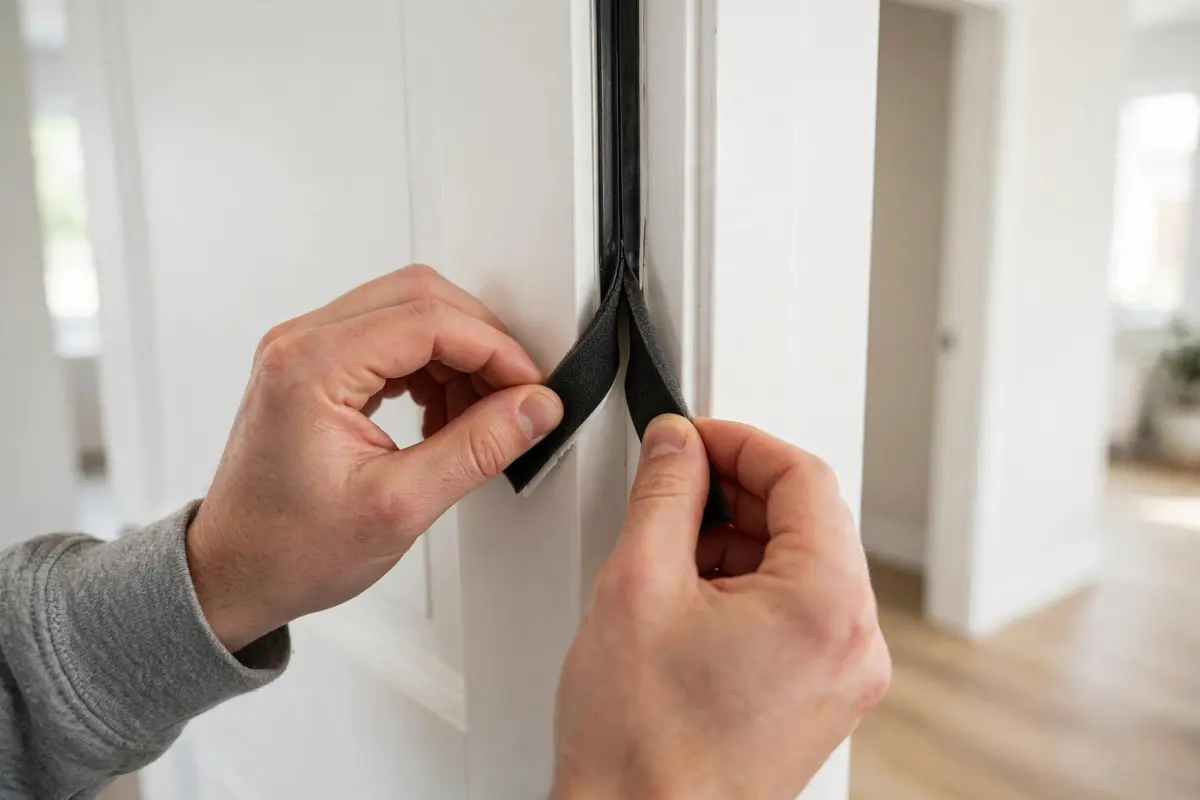
Weatherstripping 101 starts with one simple idea. Weatherstripping is a flexible seal that fills the gap between a moving part, like a door or a window sash, and its frame. Once that gap is sealed, outside air, dust, and rain have a harder path inside. Good door weatherstripping seals the top and sides of a door, plus its bottom edge. Good window weatherstripping seals where a sash meets, slides, or presses against its frame. In short, you match the seal to the gap, measure first, and fit it so it compresses slightly without stopping the door or window from closing.
Most draft problems come from a worn, missing, or wrong seal. This guide covers the main types, how to choose, how to install them, and when to replace them. Sealing gaps is also one part of a comfortable, well-kept home, and our complete home cleaning guide covers the cleaning and upkeep routines that go with it.
How can you tell if a door or window is leaking air?
You can tell a door or window is leaking if you feel moving air around a closed frame, see daylight at the edge, or find dust in a line along the sill or jamb.
Close the door or window on a thin sheet of paper, then try to pull it out. If it slides out with almost no grip, the seal is weak there. If it resists or tears, contact is better. Repeat at several points, because a frame can seal at the top and leak at one corner. Cracks, flat spots, and peeling adhesive in the seal itself also mean it is failing.
What are the main types of weatherstripping?
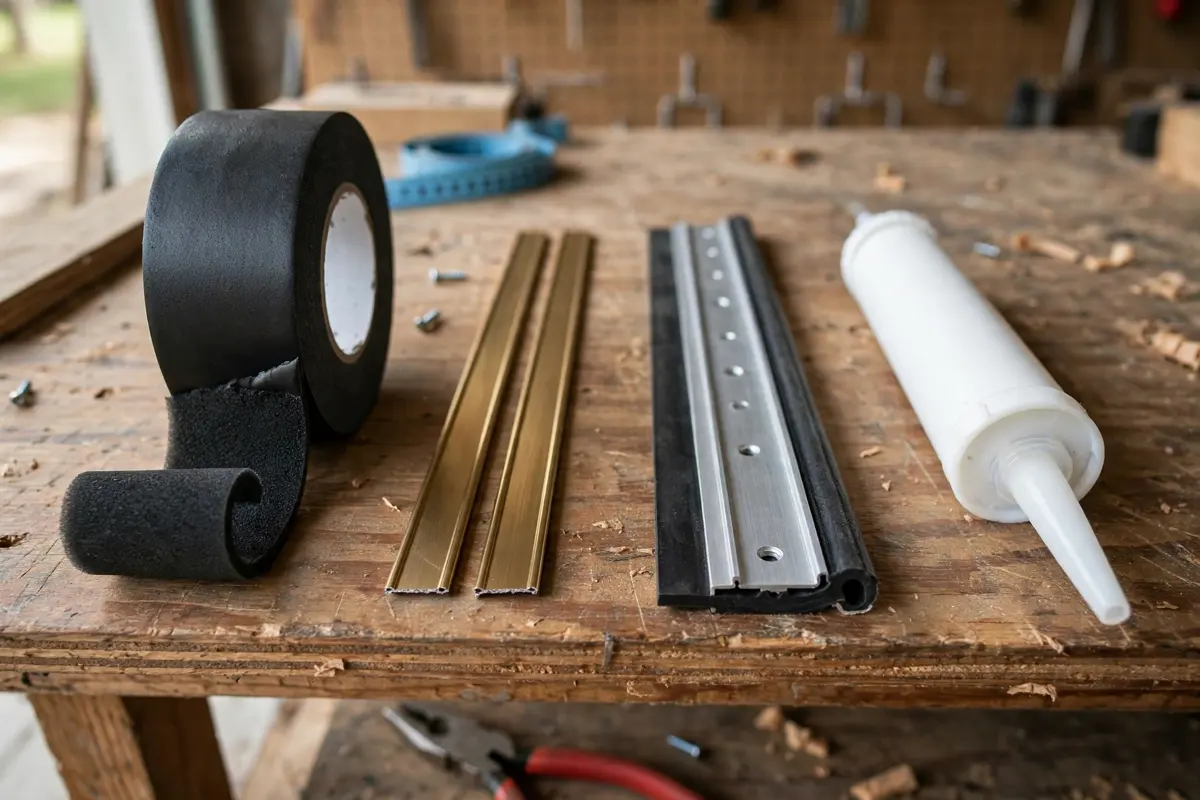
The main types of weatherstripping are V-strip, foam tape, kerf seals, tubular rubber or silicone seals, and door sweeps. Each seals a different kind of gap, so type matters as much as material.
| Type | Best for | Trade-off |
|---|---|---|
| V-strip (tension seal) | Door jamb sides, double-hung window channels | Lasts well; metal needs nails |
| Foam tape | Even, small to medium gaps | Easiest to fit; often lasts 1 to 3 years |
| Kerf seal | Doors with a groove in the frame | Neat and secure; needs that groove |
| Tubular rubber or silicone | Uneven gaps on doors and windows | Durable; costs more than foam |
| Door sweep | Bottom edge of a door only | Seals the widest gap; sides still need a seal |
V-strip, or tension seal
A V-strip is a thin strip of vinyl or metal folded lengthwise into a V. It fits inside a jamb or window channel, and the open side presses against the door or sash as it closes or slides past. Vinyl versions often have adhesive backing. Metal versions, including spring bronze, need small nails, yet they hold their shape for years.
Foam tape
Foam tape is a roll of foam, rubber, or vinyl with adhesive on one side. You cut it to length and press it onto a door stop or window sash, and its soft body fills small, even gaps. Still, foam is the short-life option: guides put it at about 1 to 3 years before it flattens or loses its stick.
Kerf weatherstripping
Kerf weatherstripping has a narrow fin that pushes into a thin groove, the kerf, in the door frame. Many newer doors already have that groove, and the exposed side is usually a foam, rubber, or silicone bulb. To replace it, pull the old seal out and press the new fin in by hand. If your frame has no groove, this type will not fit.
Tubular rubber and silicone seals
Tubular seals are hollow tubes of rubber, vinyl, or silicone. Some nail or screw to the frame through a flange, and others press into a channel. The tube squashes as the door or window closes, then springs back as it opens. Rubber handles uneven gaps well, and silicone stays flexible in heat and cold.
Door sweeps
A door sweep seals only the bottom of a door. It is a metal or plastic strip with a rubber, vinyl, or brush fin under it, screwed to the inside face of the door so the fin meets the threshold. The bottom gap is often the widest gap on the door. Some sweeps are adjustable, so you can lower the fin as it wears.
How do you choose the right weatherstripping?
You choose the right weatherstripping by matching three things: the size of the gap, how the door or window moves, and how much weather the spot gets. If those three line up, the seal usually works.
Narrow, even gaps suit foam tape or a V-strip. Wide or uneven gaps suit a tubular seal, because the tube has more material to compress. Sliding sashes need a seal that lets them glide, like a V-strip in the channel. Hinged doors and casement windows close by pressing, so a bulb or kerf seal works well. An exterior door in rain and sun needs rubber, silicone, vinyl, or metal, not cheap foam.
How do you measure for weatherstripping?
You measure for weatherstripping by measuring the length of each side you plan to seal, and by checking the gap width at several points. Length tells you how much to buy, and gap width tells you which thickness.
For a door, measure the top and both sides of the frame, plus the door width for the sweep. For a window, measure where the sash meets the frame and, on a double-hung window, where the two sashes meet. If the gap changes from top to bottom, pick a tubular seal that can handle it. Buy a little extra length, and take a piece of the old seal with you, since matching its profile saves a second trip.
How do you install door weatherstripping?
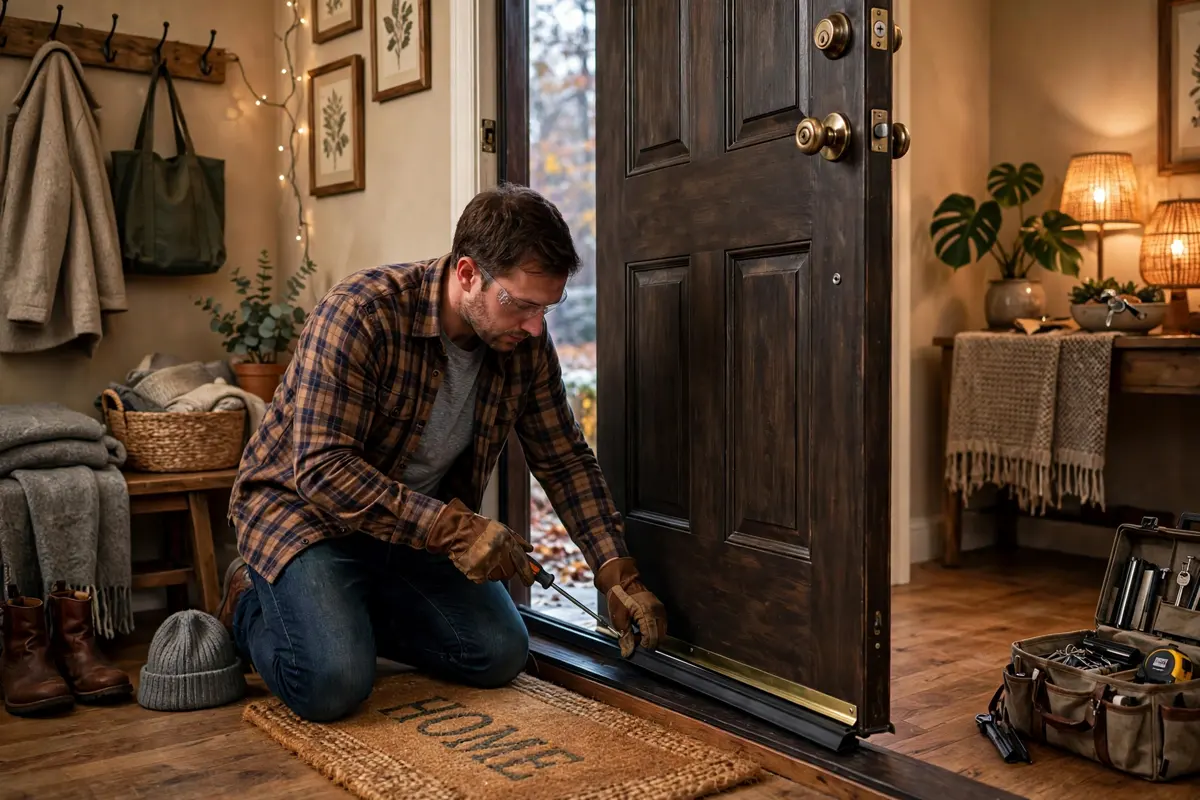
You install door weatherstripping by sealing the top and sides of the frame first, then fitting a sweep at the bottom. Preparation comes first: pull off the old seal, scrape away old adhesive and loose paint, then wash the area and let it dry fully. Adhesive will not hold on dust, grease, or damp wood. If you spot mould around a damp frame while you clean, check whether vinegar kills mold before you seal over it.
- Measure the top of the frame and cut the seal to length.
- Fit the top piece first. Peel back a short section of backing at a time for adhesive types, or push the fin into the groove for kerf seals.
- Fit each side piece next, butting the ends neatly against the top piece at the corners.
- Close the door. It should latch without a hard push, with the seal touching all the way around.
- Fit the sweep last, trimmed to width, so its fin just touches the threshold.
- Open and close the door several times, then run the paper test again.
Do not stretch adhesive strips as you apply them, because stretched foam or vinyl creeps back and the ends pull away from the corners.
How do you install window weatherstripping?
You install window weatherstripping by sealing the places where the sash moves or meets the frame, and the right spots depend on the window style.
On a double-hung window, the leak points are the side channels, the top of the upper sash, the bottom of the lower sash, and the meeting rail where the sashes overlap. V-strip fits the side channels because the sash can still slide, and foam or a tubular seal suits the bottom rail and meeting rail. On a sliding window, fit V-strip in the track. On a casement window, fit foam or tubular seal where the sash presses against the frame.
Fit one section at a time: clean, measure, cut, then press or fix it in place. If the window sticks, the seal is too thick or in the wrong place. Move it rather than forcing the sash, which can strain the hardware. Caulk is different, too: weatherstripping seals moving parts, while caulk seals fixed joints. While the sash is open, it is also a good moment to check the pane itself — here is how to remove scratches from glass if you find light marks.
What mistakes should you avoid?
The most common weatherstripping mistakes are picking a seal that is too thick, leaving corners open, and sticking adhesive onto a dirty surface. Each one creates the leak the job was meant to stop.
A seal that is too thick can stop a door from latching and a window from closing fully, so the gap moves to another edge. A seal that is too thin touches nothing, so it seals nothing. Overlapping pieces at a corner lifts the seal off the frame, so cut them to meet cleanly. Sealing a door’s sides but skipping its bottom is another frequent error, since the bottom is usually the largest gap.
How long does weatherstripping last, and when should you replace it?
How long weatherstripping lasts depends on the material, the weather it faces, and how often the opening is used. Foam tape sits at the short end, at about 1 to 3 years. Tubular rubber and vinyl often last around 5 years. Silicone and metal can last longer, sometimes close to a decade or more. Those ranges come from repair and window guides, and products vary, so treat them as guides, not promises.
Home repair sources citing U.S. Department of Energy guidance point to checking weatherstripping once a year. Look for these signs:
- A draft around a closed door or window.
- Daylight at the edge of a closed door.
- A seal that is cracked, torn, brittle, or flat.
- Adhesive that has let go, so the strip hangs or curls.
- Dust, pollen, or insects getting in along the frame.
- Extra noise or condensation near the frame.
If only one short section is damaged, replace that section. If the seal is flat or brittle in several places, replace the whole run.
Does weatherstripping really save energy?
Weatherstripping can save energy by cutting the heated or cooled air that leaks out around doors and windows, but the exact saving for your home is uncertain and depends on how leaky it was to start with.
Older U.S. Environmental Protection Agency guidance linked air-leak sealing in general to savings of 10 percent or more on an energy bill. Note the limit, though: it covered caulking, sealing, and weatherstripping all openings together, not weatherstripping alone. So do not expect one door seal to cut a bill by that amount. Sealed gaps still mean less leakage to fight, and rooms feel less drafty right away. A sealed, draft-free living room is also simply more comfortable — once yours is sorted, settle in with one of these good Netflix movies for a proper movie night.
Frequently Asked Questions
What is the difference between door weatherstripping and window weatherstripping?
Door weatherstripping and window weatherstripping do the same job, but they are shaped for different gaps. Doors use frame seals on the top and sides plus a sweep at the bottom. Windows use slimmer seals in sash channels and at meeting rails.
Can you put weatherstripping on a door that already has a kerf seal?
Yes, you can replace a kerf seal, and you should not stack a second seal on top of it. Pull the old seal out, clean the groove, and press in a new one with a matching fin.
Where does a V-strip go on a double-hung window?
A V-strip goes inside the side channels that the sashes slide in, with the open side of the V facing the sash. The strip then springs against the sash edge as it moves.
Why is my door hard to close after adding weatherstripping?
Your door is hard to close because the new seal is too thick, sits too far into the door’s path, or was stretched into the corners. Check the latch side first, since extra thickness shows up most there. A thinner foam profile usually fixes it.
Can weatherstripping keep out rain, dust, and insects as well as air?
Yes, a well-fitted seal also blocks wind-driven rain, dust, and small insects at the same gaps. That is a side benefit, not a guarantee, because water can still enter through fixed joints that need caulk or flashing.
Should you remove weatherstripping before painting a door or window?
Yes, you should remove it or mask it before painting. Paint makes foam and rubber stiff, and it can stick a sash or door to its frame.


1 Comment
Pingback: Plain Blue Grey Wallpaper: Shades, Finishes, Best Rooms & Tips