



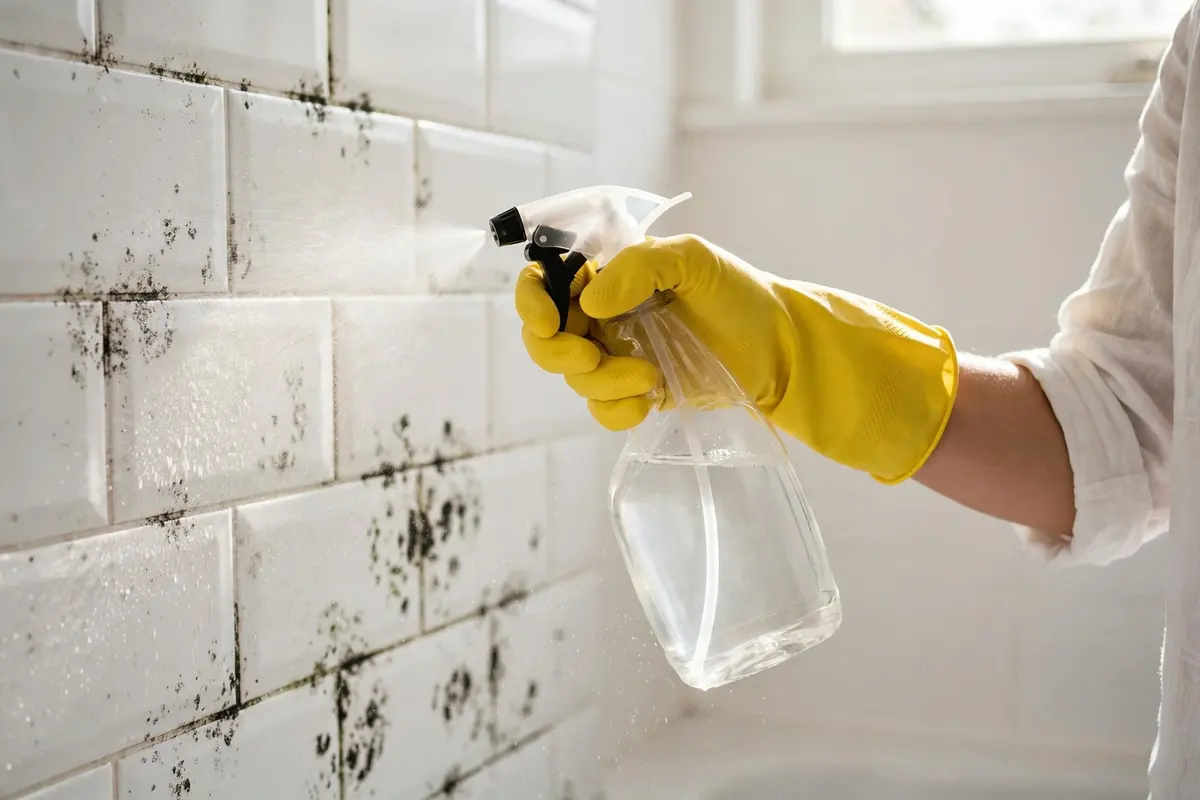
Yes, vinegar kills many common household molds — but not all of them, and not on every surface. Plain white vinegar works best on small patches on hard, non-porous surfaces like tile, glass, and sealed countertops. Its acetic acid makes the surface too hostile for most molds to survive, and it does this without the harsh fumes bleach gives off. So does vinegar kill mold in every situation? No. One well-known lab test found it handled one common household mold and failed against another. Vinegar is not a registered disinfectant, it can damage stone, grout, and wood finishes, and it cannot reach mold growing deep inside a wall. Used on the right surface, with enough contact time, it is a reasonable first response to a small problem. Used blindly, it disappoints. The sections below separate what the evidence supports from what is mostly repetition.
Why Does Vinegar Kill Mold at All?
Vinegar works because of acetic acid. Household white vinegar is typically about 5 percent acetic acid, with a pH around 2.5. That level of acidity disrupts the cell membranes of many fungi and stops them from growing. The mold simply cannot function in an environment that acidic.
You have probably seen the claim that vinegar kills 82 percent of mold species. That figure is repeated on hundreds of cleaning sites, yet it rarely comes with a source. It traces back to a Heinz spokesperson citing lab tests of a straight 5 percent solution, which reportedly killed 99 percent of bacteria, 82 percent of mold, and 80 percent of germs. Useful context — not a guarantee for your bathroom wall.
More specific research tells a narrower story. A 2015 study tested vinegar at roughly 4 percent acetic acid against two common household molds. It worked against Penicillium chrysogenum, a mold often found in damp buildings. It did not work against Aspergillus fumigatus. Same vinegar, same method, different species, different result. That split is the honest summary of vinegar as a mold killer: effective against many everyday molds, unreliable against some, and impossible to judge by eye, because you cannot tell which species is growing on your shower wall.
One more limit deserves plain language. Vinegar has never been registered with the U.S. Environmental Protection Agency (EPA) as a disinfectant or fungicide. The EPA does not evaluate plain household ingredients that way, and vinegar has not passed the testing a registered product must pass. That does not mean it does nothing. It means no regulator has certified how much it kills, or how fast.
Which Vinegar Should You Use for Mold?
Use plain white distilled vinegar, full strength. The standard grocery-store bottle, at about 5 percent acidity, is the version nearly all the guidance is based on. Cleaning vinegar, sold at around 6 percent acidity, is a reasonable step up for stubborn patches. It is also more irritating to skin and eyes, so gloves matter more with it.
Skip the flavored bottles in your pantry. Apple cider vinegar and wine vinegars contain sugars and other residues that make them less suitable for this job, and they can leave food behind for microbes on a damp surface. Whatever you choose, do not water it down.
How to Clean Mold With Vinegar, Step by Step
Technique matters more here than brand or bottle. Most failures come from rushing, not from the vinegar itself.
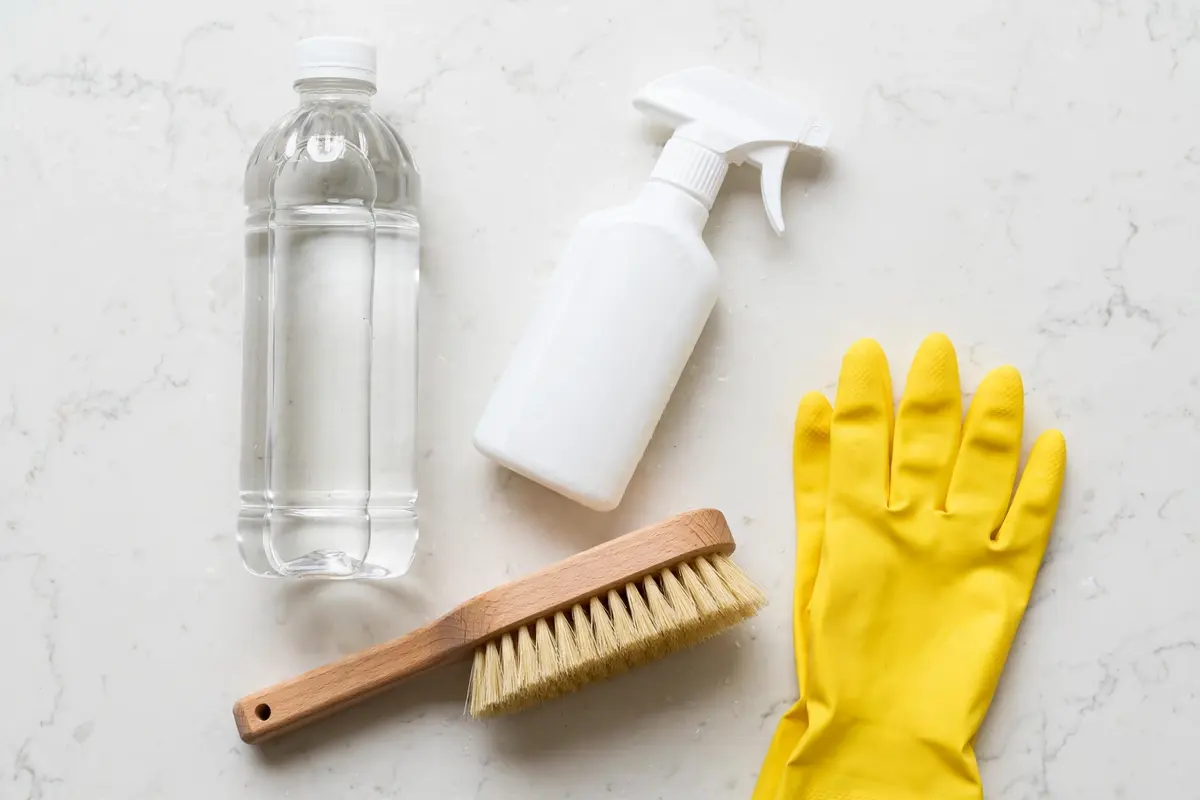
You need undiluted white vinegar, a spray bottle, a scrub brush or old toothbrush, a cloth, gloves, and a mask for anything beyond a few spots. Open a window or run the exhaust fan before you start.
- Spray first, scrub second. Dry mold releases spores the moment you disturb it. Wet the patch thoroughly with vinegar before anything touches it, so you are scrubbing a soaked surface instead of launching spores into the room.
- Saturate the area. Spray until the growth is fully wet, not just misted.
- Let it sit for at least an hour. This is the step people skip. The acid needs sustained contact to work. A spray followed by an immediate wipe accomplishes very little.
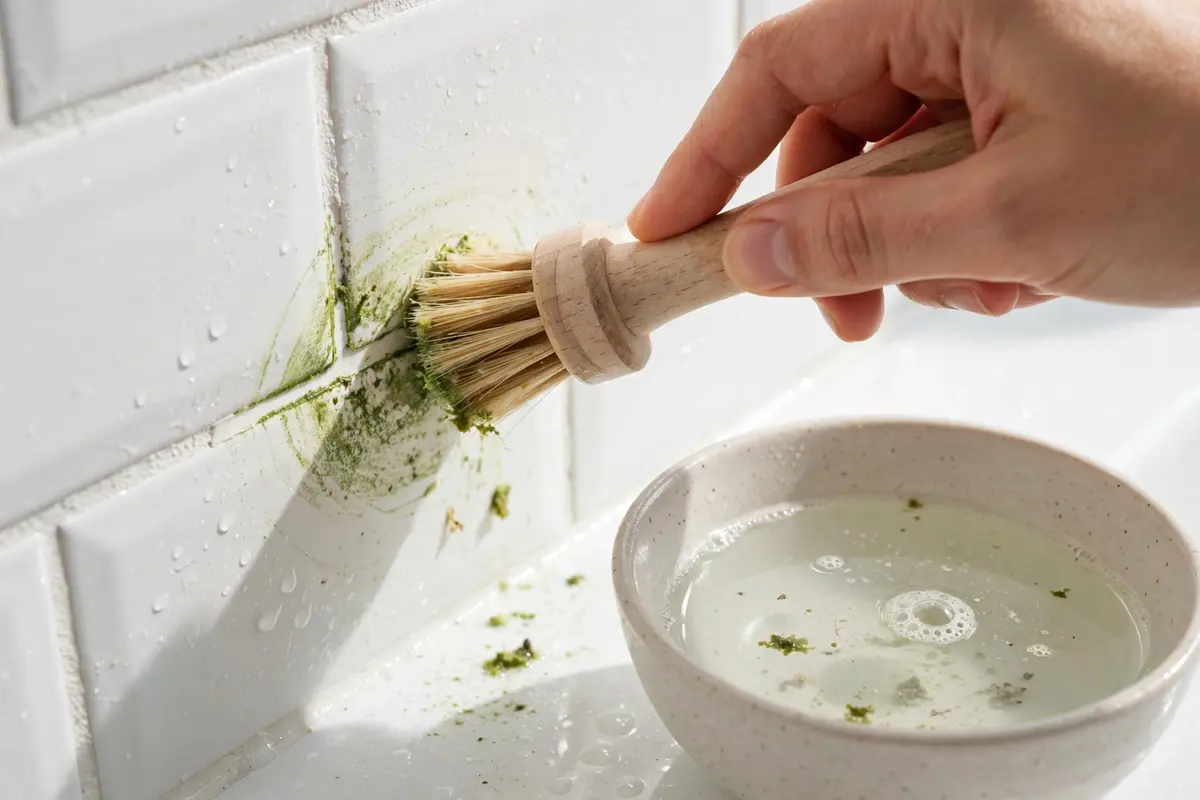
- Scrub the loosened growth. Use the brush on grout lines and textured spots, and a cloth on smooth surfaces. Scrub gently on painted drywall, because the paper face tears when it is wet and softened.
- Wipe the residue away. Dead mold left sitting on the surface can still bother people with mold allergies, so remove it rather than leaving it in place. Bag the cloth or paper towels and take them out of the room.
- Dry the area completely. A fan or open window speeds this up. A surface left damp is an invitation for the next colony.
- Repeat if staining or growth remains. A second application after the surface dries often handles what the first pass missed.
Does Vinegar Kill Mildew, or Is Mildew Different?
Mildew is not a separate organism. The word usually describes mold growing flat and superficially on a surface, often as a powdery white or gray film on shower walls, windowsills, and damp tile. Because mildew sits on the surface instead of burrowing into the material, it is the easiest form of growth for vinegar to handle.
White vinegar and mildew are a good match for that reason. The same spray, wait, scrub, and dry routine clears mildew from tile, glass shower doors, and refrigerator door seals reliably. If the film keeps returning in the same spot every week, the vinegar is doing its job and the room is undoing it. Mildew that reappears that quickly is a ventilation problem wearing a cleaning problem’s clothes.
Does Vinegar Kill Mold on Every Surface?
No, and the surface matters as much as the mold. On non-porous materials — glazed tile, glass, metal, sealed countertops, the inside of a refrigerator — vinegar reaches everything, because the mold is living on top of the material.
Porous materials are murkier territory. You will often read that vinegar soaks into porous material and kills mold at the root, while bleach cannot. There is some logic there — vinegar is mostly water and can wick in to a degree. But remediation professionals push back on the stronger version of that claim, and they have a point. No spray-on liquid reliably reaches a colony spreading through drywall paper, insulation, or carpet padding. On semi-porous surfaces like unfinished wood or painted drywall, treat vinegar as a surface treatment that may help with light growth, not as proof the problem underneath is gone.
Soft furnishings are mostly beyond saving once mold sets in. The EPA’s guidance treats moldy carpet, upholstery, and similar absorbent materials as items to remove and discard rather than clean. Washing a removable fabric cover is fine. A moldy carpet pad is not a vinegar project.
Which Surfaces Can Vinegar Damage?
The same acidity that kills mold also attacks certain materials. Keep vinegar away from these:
- Natural stone. Marble, granite, limestone, and travertine can be etched and dulled by acid. Vinegar also breaks down the sealant protecting stone, which leaves it open to staining. Use a pH-neutral stone cleaner instead.
- Unsealed or worn grout. Cement-based grout erodes under repeated acid exposure. Sealed grout in good condition tolerates an occasional treatment, but vinegar should not become your routine grout cleaner.
- Hardwood floors and wood finishes. Acid can dissolve or cloud the protective finish on wood flooring, and some manufacturers warn that vinegar use can void a floor’s warranty. On wood furniture, repeated use dulls the finish over time.
- Cast iron. Vinegar strips the seasoning layer that makes cast iron nonstick, and long soaking can pit the metal.
- Rubber gaskets and hoses. Prolonged or repeated exposure degrades rubber parts in appliances, so wipe any overspray off seals rather than letting it sit.
When you are unsure about a surface, test a small hidden spot first and wait a day before treating the visible area.
If you have pets at home, check whether vinegar is safe for cats before you spray it around feeding or litter areas.
Is Vinegar Better Than Bleach for Killing Mold?
For most small household patches, vinegar is the safer choice, though the honest comparison is less one-sided than cleaning blogs suggest. Bleach is a strong surface disinfectant on hard, non-porous materials like tile and glass. Its weakness is structural. Bleach is mostly water, and on porous material the chlorine stays near the surface while the water portion soaks in. The visible stain fades, which looks like success, while growth deeper in the material can survive. The EPA does not recommend bleach as a routine mold cleaner for this reason, and notes that background levels of mold often remain after bleaching.
Vinegar avoids the worst of bleach’s fumes and is gentler to live around, but it is slower and, as covered above, not certified against anything. Neither product fixes mold growing inside wall cavities. Pick vinegar for small patches on household surfaces, bleach only when you specifically need surface disinfection on a hard material, and neither for a large area.
One safety rule overrides every preference here. Never mix vinegar with bleach. The combination releases chlorine gas, which can seriously damage your lungs. Also avoid combining vinegar and hydrogen peroxide in the same bottle, because that mixture forms peracetic acid, an irritant to skin, eyes, and airways. Using one, rinsing, and letting the surface dry before the other is different from mixing — but for mold, one product is enough.
The same caution applies to other household cleaners — see whether Pine-Sol is safe for cats before using them around pets.
Mistakes That Make Vinegar Fail
- Watering it down. A half-strength mix feels economical and performs like it. The acidity is the active ingredient.
- Wiping too soon. Spraying and immediately scrubbing gives the acid seconds of contact instead of the hour it needs.
- Scrubbing dry mold first. Brushing a dry patch before wetting it spreads spores around the room.
- Treating one pass as a verdict. Older growth and textured surfaces often need a second application. Judge the result after the surface dries, not while it is wet and dark.
- Leaving the dead mold behind. Killing the growth is half the job. Residue that stays on the wall can still trigger allergy symptoms and hides whether anything is regrowing.
When Should You Call a Professional Instead?
The EPA’s rule of thumb is area. If the mold covers more than about 10 square feet — roughly a 3-by-3-foot patch — hire a mold remediation professional rather than treating it yourself. Call one regardless of size if mold has reached your heating, ventilation, or air conditioning system, if the growth followed flooding or sewage-contaminated water, or if the patch returns quickly after repeated cleaning, since that pattern usually means growth inside the wall or floor.
Your own health counts too. People with asthma, mold allergies, or weakened immune systems are better off having someone else do even moderate cleanups, because scrubbing any mold patch stirs spores into the air. And if you cannot find or fix the water source — a hidden pipe leak, a roof problem, condensation inside a wall — cleaning alone will keep losing to the leak.
How Do You Keep Mold From Coming Back?
Mold does not need much: spores are already in every home, so growth starts wherever moisture sits still. Prevention is moisture control, full stop. Fix leaks promptly, including the slow drip under a sink that keeps the cabinet floor damp. Ventilate bathrooms during and after showers, and wipe down shower walls in rooms with poor airflow. Dry water-damaged materials quickly after a spill or flood, and discard anything absorbent that stayed wet, like soaked carpet padding. A light vinegar spray on a mildew-prone surface can discourage growth between cleanings, but it is a holding action. If the surface stays damp, the mold returns, and no bottle in the cupboard changes that outcome.
Related reading: a calmer, less distracting home workspace also helps — see how to stay focused with Focus modes and timers.
Frequently Asked Questions
How long does vinegar need to sit on mold to work?
Give it at least an hour. The acetic acid kills through sustained contact, not on impact, so a quick spray-and-wipe mostly just wets the surface. For heavy or textured growth, a longer sit or a second application after drying works better than scrubbing harder during the first one.
Can vinegar kill black mold?
It can kill many dark-colored household molds on hard surfaces, and small patches are reasonable to treat yourself. But color cannot tell you the species. The mold people call “black mold,” Stachybotrys chartarum, usually grows on water-damaged material like soaked drywall, and that kind of damage is a removal and repair job, not a spray-bottle job, whatever cleaner you use.
Should you rinse after cleaning mold with vinegar?
Wipe the area with a damp cloth to lift the residue, then dry it fully. Rinsing is not about neutralizing the vinegar — a thin film left behind is harmless on most hard surfaces — it is about removing the dead mold, which can still irritate allergies. On food-contact surfaces, do use a clean-water rinse.
Can you mix vinegar and baking soda to kill mold?
It looks productive because it fizzes, but the fizz is the two ingredients neutralizing each other. Baking soda is alkaline, so mixing it into vinegar weakens the acidity the vinegar depends on. If you want baking soda’s gentle abrasion, use it as a separate step: scrub with a baking soda paste first, rinse, then apply the vinegar on its own.
Why did mold come back after I cleaned it with vinegar?
Almost always because the moisture never left. Vinegar can kill the colony it touches, but spores from the surrounding air will colonize the same spot again if the surface stays damp from a leak, condensation, or poor ventilation. Regrowth in the same place is a plumbing or airflow problem announcing itself, not proof the cleaner failed.
Does vinegar kill mold spores in the air?
No. Vinegar only acts where the liquid touches, so it treats growth on a surface and does nothing to spores floating in the room. Airborne spore levels drop when the growth is physically removed, the area is dried, and the moisture source is fixed.
This guide is part of our Pet Safety & Care Guide collection — see the full guide for more.
This guide is part of our Home Cleaning & Improvement Guides collection — see the full guide for more.

4 Comments
Pingback: How to Stay Focused: Focus Modes, Blocker Apps, and Timers
Pingback: How to Remove Scratches From Glass: Toothpaste, Baking Soda & Cerium Oxide
Pingback: Weatherstripping 101: Types, Door and Window Guide
Pingback: Plain Blue Grey Wallpaper: Shades, Finishes, Best Rooms & Tips