




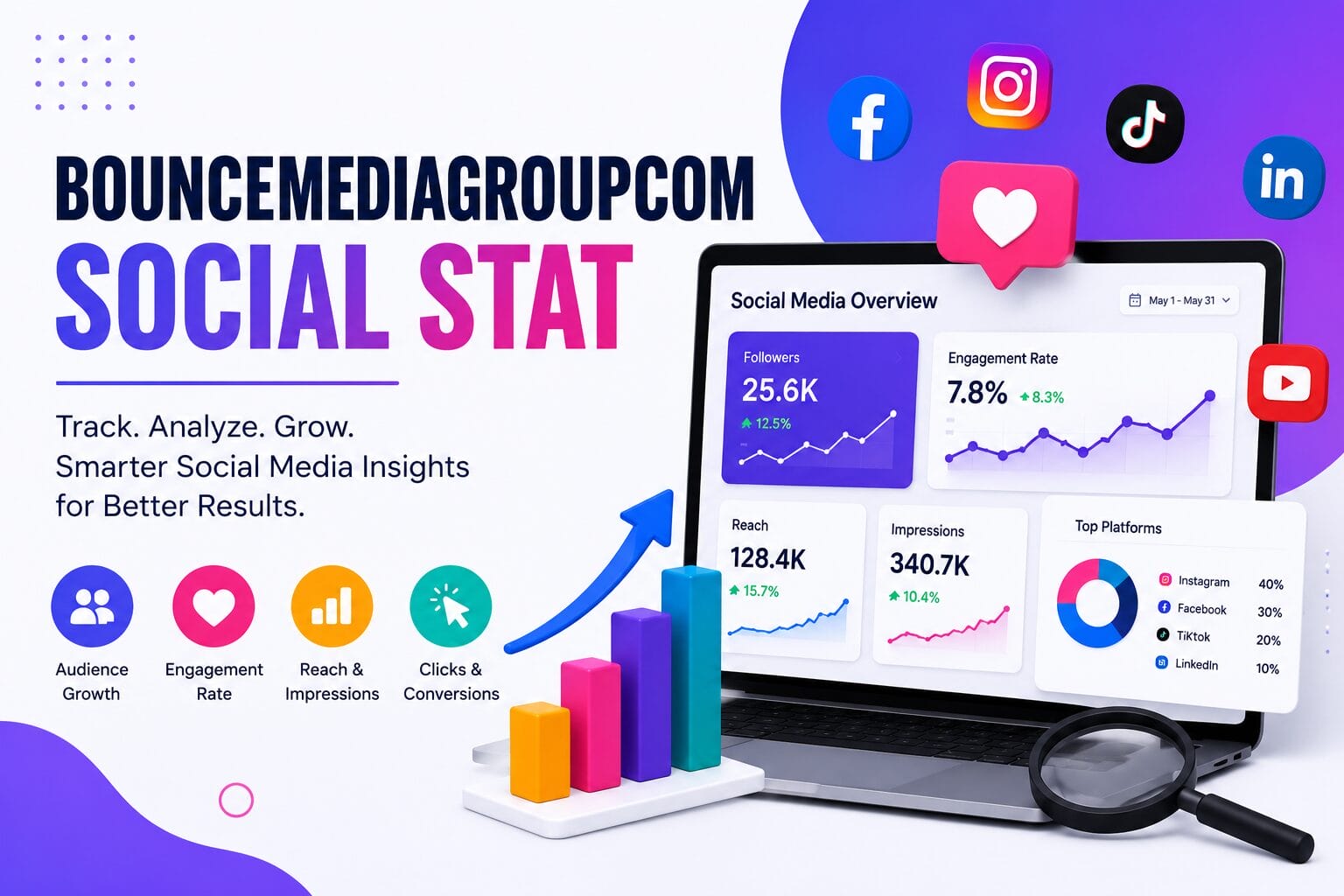
The modern digital world runs on data. Every like, comment, share, click, and follow tells a story about audience behavior. Businesses, media companies, influencers, and marketers rely on these insights to understand how their content performs and how effectively they connect with their audiences. As social media continues to dominate online communication, measuring performance has become more important than ever.
One topic that has gained attention among digital marketing observers is bouncemediagroupcom social stat. The phrase is often associated with understanding social media performance, audience engagement, and the role analytics play in digital growth. While social platforms provide large amounts of information, knowing how to interpret and apply that information is what truly drives success.
This article explores the importance of social statistics, how they influence digital strategies, and why performance measurement remains a critical part of online marketing.
Understanding Social Statistics in the Digital Age
Social statistics are measurable indicators that reveal how audiences interact with content across social media platforms. These metrics help organizations determine whether their online efforts are producing meaningful results.
Years ago, success on social media was often measured by follower counts alone. Today, businesses understand that audience size is only one piece of the puzzle. Engagement, reach, content effectiveness, and conversion rates often provide a more accurate picture of success.
The growing interest in bouncemediagroupcom social stat reflects the broader shift toward performance-based digital marketing. Organizations no longer want to guess what works. They want reliable data that can guide smarter decisions.
Social statistics provide that guidance by offering clear evidence about audience preferences and content performance.
Why Analytics Matter More Than Ever
Digital marketing has become increasingly competitive. Millions of pieces of content are published every day, making it difficult for brands to capture attention.
Analytics help solve this challenge by identifying patterns and opportunities.
Instead of relying on assumptions, businesses can examine actual user behavior. They can see which posts attract engagement, which campaigns drive traffic, and which content formats generate the strongest responses.
This data-driven approach reduces uncertainty and increases efficiency. Marketing budgets can be allocated more effectively, and content strategies can be refined based on measurable outcomes.
The concept behind bouncemediagroupcom social stat highlights the value of using analytics as a foundation for strategic growth.
The Most Important Social Media Metrics
Not all social media metrics carry the same weight. Different goals require different measurements.
Reach indicates how many unique users have seen a piece of content. This metric helps brands understand visibility.
Impressions represent the total number of times content is displayed. While reach measures unique exposure, impressions capture overall visibility.
Engagement includes actions such as likes, comments, shares, saves, and reactions. High engagement often signals that content resonates with an audience.
Follower growth tracks changes in audience size over time. Consistent growth may suggest increasing brand awareness and relevance.
Website clicks show how effectively social content encourages users to take action beyond the platform.
Video performance metrics reveal viewing habits, retention rates, and audience interest levels.
These measurements form the core of what many people seek to understand when researching bouncemediagroupcom social stat and related performance indicators.
How Audience Engagement Reflects Content Quality
Engagement is often considered one of the strongest indicators of content effectiveness.
When users interact with content, they signal interest, relevance, or emotional connection. Comments may indicate discussion, shares may suggest value, and saves often demonstrate long-term usefulness.
However, engagement should not be viewed in isolation. A post may receive thousands of likes but contribute little to broader business goals. Effective analysis considers engagement alongside other metrics such as traffic, conversions, and audience retention.
Brands that consistently earn meaningful engagement typically focus on audience needs rather than self-promotion. They create content that informs, entertains, solves problems, or inspires action.
Analytics help identify which approaches generate the strongest audience responses and support ongoing improvement.
The Connection Between Social Media and Brand Authority
Social media plays a major role in shaping public perception.
A strong social presence can establish credibility, increase trust, and strengthen relationships with audiences. Consistent engagement and valuable content often position brands as authoritative voices within their industries.
Data helps organizations measure this progress.
Metrics such as share rates, audience growth, engagement consistency, and content reach can reveal whether a brand’s influence is expanding.
When evaluating bouncemediagroupcom social stat, one important consideration is how social performance contributes to broader brand-building objectives.
Successful brands use analytics not only to track numbers but also to understand how audiences perceive and interact with their messaging.
Content Strategy and Social Performance
Content strategy and analytics work together.
Without a content strategy, social media efforts often lack direction. Without analytics, organizations struggle to determine whether their strategy is effective.
Performance data reveals which topics attract attention, which formats encourage engagement, and which posting schedules generate the best results.
For example, some audiences may prefer educational content, while others respond better to visual storytelling. Short-form videos may outperform images in certain industries, while long-form discussions may generate stronger engagement in others.
The information associated with bouncemediagroupcom social stat highlights the importance of aligning content decisions with measurable audience behavior.
This approach creates a cycle of continuous improvement where each campaign informs future strategies.
How Social Data Supports Marketing Decisions
Every marketing decision carries some level of risk. Social analytics help reduce that risk by providing objective insights.
Marketers can identify successful campaigns, understand audience interests, and discover emerging trends.
Data can also reveal weaknesses. Declining engagement rates may indicate content fatigue. Reduced reach may suggest algorithm changes or increased competition.
By identifying issues early, organizations can adapt before performance declines significantly.
Analytics support smarter budgeting as well. Businesses can invest more heavily in channels and content types that consistently deliver results.
This practical value is one reason why discussions around bouncemediagroupcom social stat continue to attract interest among marketers and digital professionals.
Challenges in Measuring Social Success
Although analytics provide valuable information, interpreting data correctly is not always simple.
One common challenge involves focusing on vanity metrics. Large follower counts may appear impressive, but they do not necessarily indicate meaningful engagement or business impact.
Another challenge involves platform differences. Metrics can vary significantly between social networks. What works on Instagram may not perform similarly on LinkedIn or TikTok.
Changing algorithms also create complexity. Social platforms frequently adjust how content is distributed, affecting visibility and engagement.
As a result, organizations must evaluate performance within context rather than relying on isolated numbers.
Effective analysis requires a balanced view that considers multiple metrics and long-term trends.
The Evolution of Social Media Measurement
Social media analytics has evolved dramatically over the past decade.
Early measurement tools focused primarily on basic engagement metrics. Modern platforms now provide extensive audience insights, demographic information, and behavioral data.
Artificial intelligence has accelerated this evolution. Advanced analytics systems can identify patterns, predict future outcomes, and automate reporting processes.
Machine learning technologies are increasingly capable of detecting audience preferences and recommending content strategies.
The future of bouncemediagroupcom social stat and similar analytical approaches will likely involve deeper predictive capabilities and more sophisticated audience intelligence.
As technology advances, organizations will gain even greater visibility into how users interact with digital content.
Building a Sustainable Social Media Presence
Sustainable social media success requires consistency, adaptability, and measurement.
Organizations that focus solely on short-term trends often struggle to maintain long-term growth. Lasting success comes from understanding audience needs and delivering ongoing value.
Analytics play a critical role in this process.
Regular performance reviews help identify strengths and weaknesses. Data-driven adjustments improve efficiency and support continuous improvement.
Brands that embrace analytics are often better positioned to respond to changing audience expectations and evolving platform dynamics.
The insights associated with bouncemediagroupcom social stat can contribute to this ongoing process by helping organizations evaluate performance and refine their strategies over time.
The Future of Social Analytics
The future of social analytics extends beyond simple engagement measurement.
Businesses increasingly want to understand customer sentiment, purchasing behavior, and long-term relationship development.
Advanced analytics tools are moving toward integrated performance measurement that combines social media data with broader business metrics.
This approach allows organizations to connect social activity directly to revenue generation, customer retention, and brand growth.
As competition continues to increase, companies that effectively leverage analytics will gain significant advantages over those relying on intuition alone.
Data will remain one of the most valuable assets in digital marketing.
Conclusion
Social media has become an essential part of modern business communication, marketing, and audience engagement. Success in this environment requires more than publishing content—it requires understanding how audiences respond and using that information to guide future decisions.
The growing interest in bouncemediagroupcom social stat reflects the importance of social analytics in today’s digital landscape. Metrics such as reach, engagement, impressions, audience growth, and conversions provide valuable insights into performance and effectiveness.
Organizations that embrace data-driven strategies can improve content quality, strengthen audience relationships, optimize marketing investments, and achieve sustainable growth. As social platforms continue to evolve, the ability to interpret and apply meaningful analytics will remain a key factor in long-term digital success.




1 Comment
Pingback: UploadArticle com Hot: The Ultimate Guide to Trending Content You Need Today - Miss Amara